![Custom window blinds and drapery solutions at Advance Blinds & Drapery, serving [Your Location], offering stylish, functional window coverings, professional installation, and expert consultation.](https://spcdn.shortpixel.ai/spio/ret_img,q_cdnize,to_webp,s_webp/advanceblindsanddrapery.com/wp-content/uploads/2025/09/Advance-Blinds-Drapery-Logo.png)

Understanding Window Treatments: Blinds vs. Shutters
When considering window treatments, the choice between blinds and shutters is a common dilemma for homeowners. Both offer practical solutions for light control and privacy, but they differ significantly in aesthetics, durability, and functionality. Understanding these distinctions is key to making the best choice for your home’s unique needs. This comprehensive guide will delve into the specifics of blinds vs shutters.
Blinds and shutters serve as primary window coverings, each offering a distinct approach to managing sunlight and enhancing interior design. While both are popular, their materials, construction, and installation methods lead to varied performance and visual impact. Exploring the nuances of blinds vs shutters will help you navigate the options available.
Making an informed decision about blinds vs shutters involves evaluating how each option fits your lifestyle, budget, and design preferences. Whether you prioritize cost-effectiveness, robust durability, or a specific aesthetic, there’s a window treatment that will meet your requirements. For instance, if you’re curious about the investment for a specific type of shade, our cellular shades cost guide breaks down the pricing factors. Let’s break down the key differences to help you choose wisely.
What Are Blinds? Exploring Your Options
Blinds are window coverings made from slats or louvers that can be tilted to control light and privacy. They come in a wide variety of materials, including wood, faux wood, aluminum, and vinyl, offering diverse aesthetic and functional benefits. For example, exploring the different types of blinds can help you find the perfect fit for your home’s style and needs, from classic wood blinds to modern roller shades. Consider exploring the top 5 energy efficient blinds to save on heating costs.
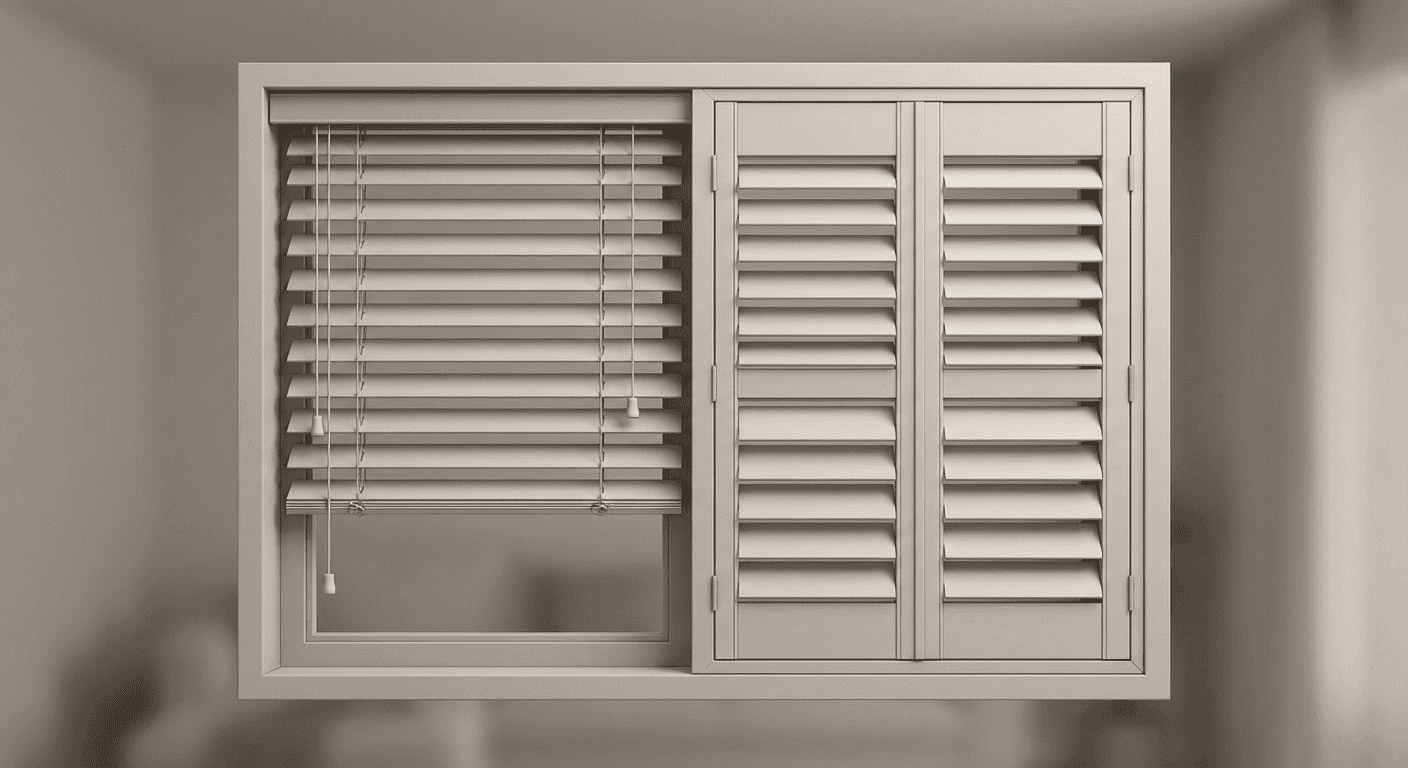
Blinds are window coverings composed of horizontal or vertical slats that can be tilted or raised to control light and visibility. They are known for their versatility and wide range of material options, making them a popular choice for many homes. The affordability and diverse styles of blinds often make them an attractive starting point when comparing blinds vs shutters.
Common types of blinds include Venetian blinds, which feature adjustable horizontal slats, and roller blinds, which are a single piece of fabric that rolls up. Vertical blinds, typically used for patio doors or large windows, have slats that hang vertically. Roman blinds offer a softer look with fabric folds when raised. Each type offers a unique aesthetic and functional benefit in the blinds vs shutters conversation.
- Venetian Blinds (Horizontal Slats)
- Roller Blinds (Single Fabric Piece)
- Vertical Blinds (Vertical Slats)
- Roman Blinds (Folded Fabric)
- Mini Blinds (Narrow Slats)
What Are Shutters? A Classic Window Treatment
Shutters are a more permanent window treatment, typically made from wood or composite materials. They consist of a frame with louvers (slats) that can be adjusted. Unlike blinds, shutters are usually mounted directly onto the window frame and offer a more substantial and decorative appearance. For those considering different window treatments, exploring Heritance Wood shutters can provide a classic and elegant option.
Shutters are window coverings made of solid panels, often with louvers that can be adjusted to control light and airflow. They are typically mounted directly onto the window frame or casing, offering a more permanent and robust solution compared to many blinds. The enduring elegance and durability of shutters make them a strong contender when evaluating blinds vs shutters.
Shutters are crafted from various materials, each offering different benefits in terms of cost, durability, and appearance. The choice of material significantly impacts their performance and aesthetic, influencing their suitability for different room environments. Understanding these material differences is crucial when comparing shutters to blinds.
| Material | Durability | Cost | Maintenance |
|---|---|---|---|
| Wood | High (can be susceptible to moisture) | Mid to High | Requires regular dusting/cleaning |
| Faux Wood | Very High (moisture and pest resistant) | Mid-Range | Easy to clean, water-resistant |
| Vinyl/PVC | Moderate to High (can degrade in intense sun) | Low to Mid | Easy to clean, water-resistant |
Key Differences: Blinds vs. Shutters at a Glance
For a comprehensive overview of window treatments available in Manitoba, consult the ultimate guide to custom window treatments for more.
Both blinds and shutters offer ways to manage the amount of light entering a room and enhance privacy. Shutters, with their solid construction, can often provide a more complete blackout effect when closed, while blinds offer varying degrees of light filtration depending on the slat type and material. For detailed information on specific types, consider our Roman Shades vs Roller Shades: Light Control guide.
Both blinds and shutters offer adjustable light control and privacy. Blinds allow for precise tilting of slats to filter light, and can be fully raised for unobstructed views. Shutters, with their louvers, also provide excellent light modulation, and when closed, they offer a solid barrier for complete privacy. The way light is diffused and the level of privacy offered can be a deciding factor in the blinds vs shutters debate.
The way light enters a room differs between the two. Blinds can sometimes cast striped patterns of light, while shutters often provide a more uniform diffusion of light when partially open. Fully closed, both can block light effectively, but the solid nature of shutters can sometimes offer a slightly superior blackout effect, depending on the fit and type.
Cost & Installation
Generally, blinds tend to be more budget-friendly than shutters, especially basic models like vinyl or aluminum blinds. Installation for blinds is often simpler, and many can be installed as a DIY project, further reducing costs. The wide spectrum of prices for blinds makes them accessible to a broader range of budgets, and you can explore options like cellular shades cost for more information.
Shutters typically represent a higher upfront investment. Their construction is more complex, and professional installation is often recommended to ensure a perfect fit and optimal functionality. While the initial cost of shutters is greater, their longevity can sometimes offset the expense over time, a key consideration in the blinds vs shutters cost analysis.
Performance and Functionality: Blinds Vs Shutters
Beyond aesthetics, the practical performance of window treatments is crucial for comfort and energy efficiency. When comparing blinds vs shutters, understanding their capabilities in insulation, moisture resistance, and ease of maintenance can significantly influence your decision. These functional aspects directly impact the daily living experience in your home.
After installing hundreds of window treatments, our team has observed firsthand how different blinds vs shutters perform in various environments. For instance, in humid areas like bathrooms or kitchens, faux wood shutters and vinyl blinds often outperform natural wood blinds which can warp or degrade. The consistent quality and moisture resistance of engineered materials in both categories are vital for longevity. For example, exploring Newstyle Composite shutters can offer a durable solution.
- Insulation: Both blinds and shutters offer some degree of insulation, helping to regulate room temperature and reduce energy costs. Shutters, due to their solid construction and tight fit, generally provide superior insulation.
- Moisture Resistance: Certain blind materials (like vinyl or faux wood) and shutter materials (like faux wood or vinyl) are highly resistant to moisture, making them ideal for bathrooms, kitchens, and coastal environments. Natural wood blinds and shutters can be more susceptible to damage from high humidity.
- Maintenance: Blinds, especially those with many slats, can accumulate dust and be more challenging to clean thoroughly. Shutters, with their simpler surfaces and adjustable louvers, are often easier to wipe down and maintain.
- Durability & Lifespan: Shutters are typically built to last longer than most blinds, often with lifespans of 15-20 years or more, whereas blinds might need replacement every 5-10 years depending on material and usage.
Style and Aesthetics: Which Wins the Blinds Vs Shutters Debate?
When considering window treatments, the choice between blinds and shutters often comes down to personal preference and specific needs. While both offer functional benefits, their aesthetic impact can differ significantly. For those seeking a classic and substantial look, shutters provide a more permanent and architectural feel. Blinds, on the other hand, offer a wider variety of styles and materials, allowing for more flexibility in design and light control, such as exploring different types of blinds to match your decor.
The visual impact of window treatments is a primary consideration for interior design. The choice between blinds and shutters significantly affects the overall look and feel of a room, contributing to different design styles. Understanding these aesthetic contributions is central to resolving the blinds vs shutters debate for your personal space.
Blinds offer a broad spectrum of styles, from the sleek, modern look of aluminum blinds to the warm, natural texture of wood blinds, and the simple elegance of Roman shades. Shutters, particularly plantation shutters, are often associated with a more classic, timeless, and architectural aesthetic, adding a sense of permanence and sophistication. For a comprehensive overview of various window treatment options, consult the ultimate guide to custom window treatments.
- Modern vs. Traditional: Blinds can lean modern or traditional depending on the material and design, while shutters are typically seen as more traditional, though contemporary shutter designs are available.
- Customization Options: While many blinds offer color and slat-size choices, shutters often provide more options for louver size, frame styles, and finishes that can be tailored to match specific architectural details.
- Architectural Fit: Shutters can enhance architectural features, giving windows a finished, built-in look. Blinds offer a more applied or layered appearance.
- Light Quality: The way light filters through blinds can create different moods than the softer, more diffused light often achieved with shutters.
Making the Right Choice for Your Home
Selecting between blinds and shutters involves aligning your choice with your home’s specific requirements and your personal preferences. By considering key factors, you can confidently determine which window treatment best suits your needs, moving beyond the general comparison of blinds vs shutters to a tailored solution, especially when considering 7 best prairie climate window solutions for extreme cold.
Consider Your Budget
The cost of window treatments can vary significantly. Understanding the price range for different types of blinds and shutters is crucial for making an informed decision. For instance, exploring the cellular shades cost can provide a good baseline for budget considerations. For a comprehensive overview, check out the ultimate guide to custom window treatments for Manitoba.
Your budget will significantly influence whether blinds or shutters are the more practical choice. Basic blinds are typically the most affordable option, making them ideal for large-scale projects or when cost is the primary concern. Shutters represent a larger initial investment, but their durability can offer better long-term value.
Evaluate Your Light Control Needs
Think about how you use each room and the amount of natural light you prefer. If precise light angling is crucial, both adjustable blinds and shutters can accommodate this. However, if you desire complete darkness, the solid construction of shutters might offer a slight advantage over certain types of blinds, especially when considering options like motorized window treatments for enhanced convenience.
Assess Room Environment (Moisture/Sunlight)
Rooms exposed to high humidity, like bathrooms and kitchens, or areas with intense, direct sunlight, require materials that can withstand these conditions. Faux wood blinds and vinyl or faux wood shutters are excellent choices for such environments, offering superior moisture and UV resistance compared to natural wood options. For high-rise living, consider these factors when selecting window treatments for privacy.
Think About Your Decor Style
Consider how the window treatments will complement your existing furniture and overall aesthetic. Whether you lean towards modern minimalism, rustic charm, or classic elegance, there’s a style of blind or shutter to match. For instance, if you’re aiming for a sleek, contemporary look, explore options like roller shades which offer clean lines and versatile functionality.
The aesthetic you aim to achieve is paramount. Shutters often lend a classic, elegant, or traditional feel, while blinds offer a wider range of styles that can complement modern, minimalist, or eclectic decor. Consider how the window treatment will integrate with your existing furniture and color schemes.
Professional Consultation for Blinds Vs Shutters
Navigating the many options and nuances between blinds vs shutters can be complex. A professional consultation provides invaluable insights, allowing our experienced team to assess your specific needs, discuss the pros and cons in detail, and recommend the best solutions for your home. We can help you explore the full range of materials, styles, and functionalities. For a deeper dive into specific types, consider our guide to light control, which details how different window treatments manage illumination.
To make the most informed decision for your blinds vs shutters choice, we encourage you to connect with our experts. With our extensive experience, we can guide you through the selection process, ensuring you find window treatments that perfectly balance beauty, functionality, and durability for your unique living space.
Conclusion: Blinds vs. Shutters – Final Verdict
Ultimately, the decision between blinds vs shutters depends on your priorities regarding budget, durability, aesthetic, and functionality. Blinds offer a versatile and often more affordable solution with a wide array of styles. Shutters provide superior durability, insulation, and a timeless, architectural look, albeit at a higher initial cost.
By carefully considering the factors discussed—from material and light control to cost and decor—you can confidently select the window treatment that best enhances your home. Whether you lean towards the adaptability of blinds or the enduring elegance of shutters, the right choice will bring beauty and practicality to your windows.