
Answer
When comparing roman shades vs roller shades, the main differences come down to construction cost and visual profile. Roman shades feature pleated fabric folds and intricate sewing that carry a higher price tag and deliver a soft, classic look ideal for formal living spaces. Roller shades use a single flat sheet of durable material that rolls tightly onto a top tube, giving homeowners a budget-friendly, minimalist window covering suited for modern rooms and high-utility areas. Advance Blinds carries custom options in both styles to match specific room designs, light control goals, and household budgets.
Overview
Homeowners comparing Roman shades vs roller shades weigh soft, pleated fabric drapery against compact, modern tube mechanisms. Choosing the right window treatment depends on room layout, light filtration needs, and seasonal thermal performance during extreme Manitoba winters and sunny summers. Below is a direct comparison of visual styles, daily maintenance requirements, and a local homeowner scenario illustrating common installation decisions.
- Key Differences: Compare the fundamental variations in construction, stacking height, and operation between both shade styles.
- Roman Aesthetics: Examine the design elements and folded fabric textures that define Roman shades.
- Roller Practicality: Check the functional advantages of sleek, low-profile roller shades.
- Choosing Roman: Review criteria for installing Roman shades in a Manitoba home to boost insulation.
- Choosing Roller: Evaluate the best rooms for roller shades based on sun exposure and moisture levels.
- Making Your Choice: Complete your final selection through an in-home consultation with Advance Blinds.
Roman Shades vs Roller Shades: Key Differences
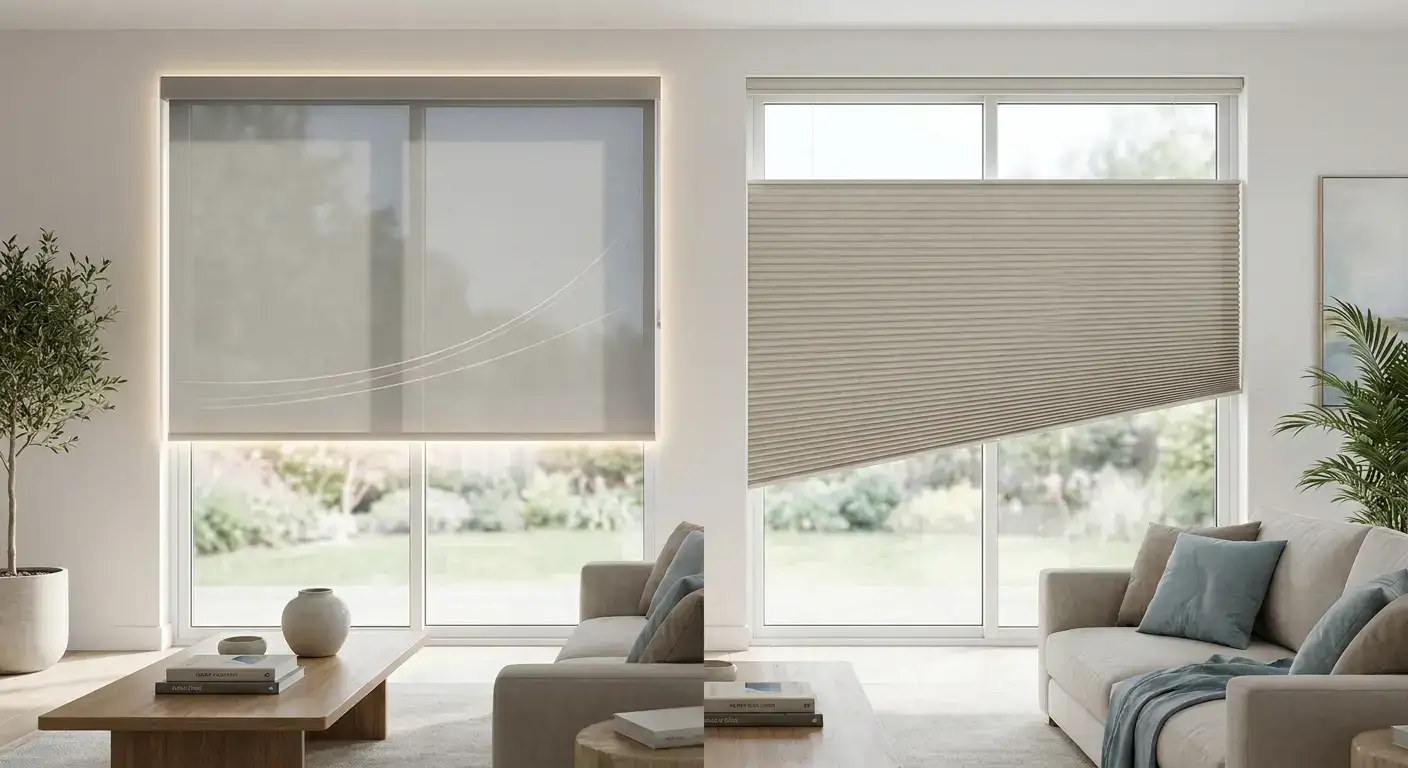
Window treatment engineering separates Roman Shades from roller shades through distinct fabric movement and visual profiles. Roman shades stack into horizontal pleats when lifted, adding textile depth and a tailored finish to window frames. Roller shades wrap a single flat sheet of fabric around an upper tube, hiding the material inside a compact cassette or open roll for a clean, low-profile window frame.
Thermal performance and light management also divide Roman shades vs roller shades. Layered drapery fabrics in Roman shades trap air at the window pane, improving room temperature retention throughout the year. Roller shades prioritize exact light regulation, offering engineered screen fabrics, sheer weaves, and room-darkening vinyls that maintain a flat profile across wide glass spans.
| Feature | Roman Shades | Roller Shades |
|---|---|---|
| Visual Profile | Dimensioned, stacked textile pleats | Flat, continuous fabric sheet |
| Lifting Mechanism | Cords or loops stack pleats evenly at the top | Coils tightly around an upper metal tube |
| Light and Thermal Control | High thermal insulation; sheer to blackout linings | Precise UV and glare ratings; sheer to 100% blackout |
| Material Selection | Woven textiles, linens, silks, and patterned drapery cloths | Vinyl, solar mesh, fiberglass, and stiffened woven fabrics |
| Cleaning Requirements | Spot treatment, vacuuming, or professional dry cleaning | Quick surface wiping with a damp cloth; resists moisture |
| Interior Style | Classic, formal, and soft traditional | Contemporary, clean-lined, and minimalist |
| Customization Options | Edge banding, decorative trims, and tailored pleat styles from blinds shades amp | Pairs with automated lift systems from alta window Fashions for remote scheduling |
The Aesthetic Appeal of Roman Shades
Roman shades fold into structured, horizontal pleats when raised, creating a dimensional drapery profile that contrasts with the flat, tight roll of roller shades. Rather than vanishing into a top cassette, the stacked fabric remains visible at the top of the window casing and adds architectural softness to bare glass.
Designers select from hundreds of woven textiles, weights, and patterns to match room upholstery and wall colors. At Advance Blinds, consultations focus on pairing custom window coverings with existing furniture so the shade functions as a built-in decorative accent.
Because heavier textiles absorb ambient sound and visually warm a space, homeowners frequently install Roman shades in formal dining rooms, living rooms, and primary bedrooms.
| Aesthetic Feature | Design Possibilities |
|---|---|
| Fabric Choice | Heavy silks, slub linens, and printed cotton weaves establish the room’s formality and visual texture. |
| Fold Style | Flat folds lie smooth for a clean, tailored profile, whereas hobbled (teardrop) folds retain soft, cascading loops even when fully lowered. |
| Color and Pattern | Solid neutrals blend into surrounding trim, while geometric or botanical prints turn the window frame into a focal point. |
| Light Control | Blackout and thermal linings block glare and street views, while unlined sheer weaves diffuse harsh daylight softly across the floor. |
| Decorative Accents | Edge banding, ribbon borders, or custom Plum Coulee mb tassels give the bottom hem a bespoke finish. |
The Practicality of Roller Shades
A single sheet of fabric rolls tightly around an upper tube in a roller shade, creating a flat profile that fits flush inside the window frame. Because the material retracts into a compact cassette or headrail, it stays protected from airborne dust, making it easier to keep them clean while eliminating visual bulk around the glass. This streamlined hardware fits contemporary, minimalist, and casual interiors without competing with existing room decor.
Fabric opacity options range from 1% to 14% openness solar screens that reduce UV glare to 100% blackout vinyl or polyester for bedrooms and media rooms. Synthetic weaves and moisture-resistant coatings handle daily wear, humidity, and grease far better than pleated drapery textiles. Consequently, kitchens, bathrooms, home offices, and playrooms benefit most from roller shades where fast wipe-downs and frequent adjustments are required.
In a direct comparison of roman shades vs roller shades, mechanical simplicity and flat, non-folding materials give roller units the practical edge. Rooms that require strict glare management and quick daily operation perform best with this low-profile format. the power of utilitarian window coverings to simplify daily home upkeep.
| Feature | Benefit for Homeowners |
|---|---|
| Simple Operation | Raises and lowers smoothly via continuous beaded chains, cordless spring-loaded rollers, or automated motors. Upgrading to SoftTouch motorization adds wand-controlled, child-safe adjustment. |
| Low Maintenance | Flat fabric panels lack horizontal folds where dust settles, cutting down weekly chores. Most vinyl and coated polyester rollers clean up quickly with warm water and mild dish soap. |
| Durability | Heavy-duty aluminum tubes, clutches, and tear-resistant synthetic textiles handle thousands of lift cycles without fraying or warping. |
| Versatile Light Control | Offered in sheer, light-filtering, solar mesh, and full room-darkening weaves to match exact daylight and nighttime privacy requirements. |
| Space-Saving Design | Coils tightly at the top of the window casing, leaving up to 90% of the glass unobstructed when raised and preserving sill space in compact rooms. |
Choosing Roman Shades for Your Manitoba Home
Winnipeg homeowners frequently install Roman shades to combine reliable light management with a tailored, fabric-rich appearance. Unlike flat vinyl or screen rollers, these window coverings stack into neat horizontal pleats when raised. That layered textile build adds depth and visual warmth to both modern and classic Manitoba interiors.
Material selection and pleat geometry determine how the shade performs and looks in a specific room. Flat-fold constructions lie nearly flush against the glass when lowered, suiting contemporary spaces with clean lines. Hobbled or soft-fold variations maintain cascading fabric loops that fit traditional dining rooms or bedrooms. Matching the weave density and fold profile to your furniture and window orientation ensures proper glare reduction without darkening the space unnecessarily.
Heavyweight woven textiles also act as a thermal barrier across glass panes during Manitoba’s extreme seasonal shifts. Thick fabric folds trap air to reduce cold drafts during sub-zero winters and block solar heat gain throughout humid summers. Installing lined Roman shades in south-facing living rooms or draft-prone bedrooms helps stabilize indoor temperatures and reduces heating and cooling loads.
| Consideration | Roman Shades Impact |
|---|---|
| Design Versatility | Extensive selection of textiles, patterns, and pleat styles to coordinate with room decor. |
| Light Control | Custom opacity levels ranging from light-filtering sheers to room-darkening blackout linings. |
| Insulation | Multi-layered fabric pleats create a thermal buffer against winter cold and summer heat. |
| Window Size | Fits standard and wide window frames when built to exact custom measurements. |
| Operation Options | Offered with traditional cords, cordless lift systems, or PowerView Automation for scheduled adjustments. |
Choosing Roller Shades for Your Manitoba Home
Roller shades roll tightly around a single upper tube, costing less on average than pleated fabric styles while occupying a minimal profile inside the window frame. Homeowners who want clean architectural lines and quick daily maintenance choose these coverings for modern interiors. Before ordering a specific style, determine the exact degree of glare reduction and night privacy each room requires.
Kitchens, bathrooms, and home offices benefit directly from wipeable vinyl or polyester weaves that resist humidity and cooking grease. Property managers and homeowners install these durable shades in rental units and busy hallways where simple, reliable mechanics prevent wear and tear. ALTA Window Fashions manufactures roller systems in dozens of fabric opacities and lifting mechanisms to match these daily demands.
Because roller shades hang completely flat when lowered, they lack the soft, dimensional folds found in traditional drapery or Roman styles. Rooms needing heavy texture or ornate fabric styling require pairing the roller tube with side curtain panels. Advance Blinds technicians perform custom measures across Manitoba to eliminate side light gaps and guarantee an exact window fit.
| Scenario | Roller Shade Suitability |
|---|---|
| High-Moisture Rooms (Kitchens, Bathrooms) | Top rating; moisture-resistant synthetic fabrics wipe clean in seconds. |
| Minimalist Design Preferences | Best match; compact cassettes and flat panels fit contemporary trim. |
| Budget-Conscious Projects | High value; requires less yardage and labor than tailored Roman folds, lowering multi-window quotes. |
| Need for Room Darkening | Strong performance; opaque blackout rollers block streetlamps and sun in bedrooms or media spaces. |
| Large Windows | Well suited; wide continuous tubes span broad glass panes, especially when paired with motorized lifts. |
| Child/Pet Safety Concerns | Top rating; spring-loaded cordless and motorized lifts improve safety by removing dangling chains. |
Making Your Final Choice with Advance Blinds
Selecting between Roman shades vs roller shades comes down to your room layout, daily maintenance habits, and specific needs for light control. Evaluate how each room functions before picking a window treatment. Living rooms and formal dining areas gain warmth from the pleated fabric folds of Roman shades, whereas kitchens and bathrooms benefit from the wipeable, moisture-resistant vinyl or solar fabrics of roller shades.
Advance Blinds assists Winnipeg, Manitoba homeowners with matching window coverings to both room design and daily wear. Busy entryways and family rooms typically require quick, simple operation, while formal sitting areas favor decorative fabric textures. Beyond product selection, Advance Blinds handles exact window measurements and professional installation so every shade fits the frame accurately.
| Window Treatment | Ideal Rooms | Price Tier | Primary Advantage |
|---|---|---|---|
| Roman Shades | Living rooms, bedrooms, and formal dining spaces focused on decor. | Higher | Delivers a soft, tailored appearance with pleated fabric folds and wide textile choices. |
| Roller Shades | Kitchens, bathrooms, home offices, and modern minimalist spaces. | Lower | Features a compact profile, simple operation, and quick surface cleaning. |
| Automated Roman Shades | Smart homes requiring scheduled or remote window adjustments. | Highest | Pairs pleated fabric styles with SoftTouch motorization or PowerView Automation for cord-free lifting. |
| Blackout Roller Shades | Bedrooms, media rooms, and nurseries requiring total darkness. | Medium | Blocks incoming sunlight to maximize daytime sleep and evening privacy. |
FAQ
Deciding between roman shades vs roller shades often comes down to how each window treatment handles daily demands like light filtration, glare reduction, and home insulation. The table below addresses the most common questions Winnipeg homeowners have when choosing the ideal fabrics and styles for their living spaces.
| Question | Answer |
|---|---|
| What is the difference in light control when comparing Roman shades vs roller shades for Winnipeg homes? | When comparing roman shades vs roller shades for Winnipeg homes, roller shades provide more precise light control with a flat, unbroken fabric surface that minimizes side gaps and rolls up tightly for a clear outside view. Roman shades create a softer, diffused glow through their pleated fabric folds, though those stacked folds still cover the top of the window when fully raised. Both options support custom light-filtering and blackout linings to block intense summer sun or add bedroom privacy. Your choice depends on whether you prefer the clean, minimal profile of a roller shade or the decorative, drapery-like look of a Roman shade. |
| Do Roman shades or roller shades provide better insulation for Winnipeg homes? | Roman shades provide better insulation than roller shades because their heavier fabrics, folded pleats, and optional thermal linings trap air at the window. This layered construction helps reduce winter drafts and retain indoor heat during cold Winnipeg winters. Roller shades use a flat, single-layer fabric that offers less thermal resistance, though choosing thick blackout or solar materials still helps block summer heat gain. When comparing roman shades vs roller shades for energy efficiency, lined Roman shades deliver stronger year-round temperature control for Winnipeg homes. |
| Are Roman shades or roller shades better at reducing sunlight glare in Winnipeg homes? | When comparing roman shades vs roller shades for reducing sunlight glare in Winnipeg homes, roller shades generally provide better control due to their flat, unbroken fabric surface. Solar and light-filtering roller shades cut harsh glare on TVs and computer screens while still maintaining your outdoor view. While Roman shades also block direct sun, their pleated folds sit slightly further from the window frame and can allow minor light gaps along the edges unless installed as an outside mount with a room-darkening liner. |
| What fabrics and materials are used for Roman shades vs roller shades in Winnipeg, and how do they affect light filtration? | Comparing roman shades vs roller shades for Winnipeg homes starts with their fabric construction and light filtration capabilities. Roman shades use soft woven textiles like cotton, linen, silk, and synthetics that create a warm, diffused glow, though adding a thermal or blackout lining blocks bright prairie sunlight completely. Roller shades use stiffer, durable materials such as vinyl, polyester, and solar screen mesh to deliver a clean, low-profile look. These flat fabrics allow precise light control, ranging from UV-blocking sheer views to total room darkening. |