
Answer
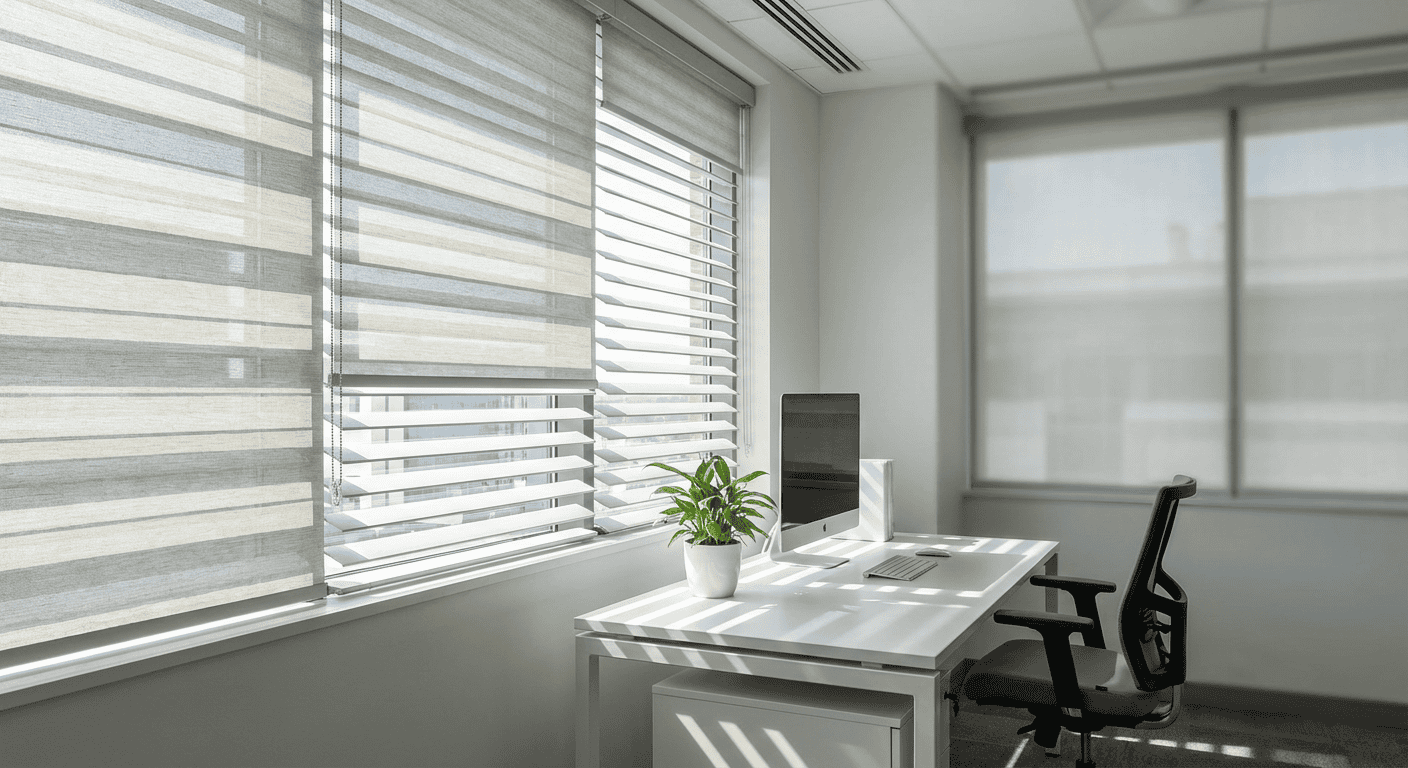
Solar roller shades with 1% to 5% openness factors, aluminum Venetian slats, and commercial vertical panels filter 95% to 99% of incoming ultraviolet radiation, serving as the top office blinds solutions for active workspaces. These commercial window systems stop screen glare, stabilize room temperatures, and protect interior privacy. Advance Blinds fits corporate buildings with heavy-duty window treatments that combine UV-blocking sunscreen materials with motorized track hardware. Installing flame-retardant, easy-to-clean fabrics lowers air conditioning demands and stops daily eye strain for staff.
Overview
Bare commercial glazing causes 25% to 30% of building HVAC energy loss, positioning targeted office blinds solutions as a direct control against excessive cooling costs and disruptive screen reflections. Heavy-duty commercial window coverings filter up to 99% of damaging ultraviolet radiation, lower solar heat gain by up to 45%, and deliver instant sightline privacy for street-facing desks and private boardrooms.
Facility managers must align fabric openness factors (spanning 1% to 10%), NFPA 701 flame-retardant certifications, and lift hardware with the daily requirements of each building zone. Apply the technical benchmarks below to select, mount, and maintain commercial window coverings across your facility:
- Screen Glare and UV Protection: Commercial office blinds stop computer monitor washout, protect interior finishes from sun bleaching, and cut off direct exterior sightlines.
- Commercial Window Treatment Systems: Evaluate the primary types of blinds built for business environments, from solar roller shades and vertical louvers to aluminum Venetian blinds and cellular honeycomb shades.
- Professional Hardware Mounting: Examine the advantages of professional installation to guarantee millimeter-accurate opening measurements, heavy-duty structural anchoring, and full ANSI/WCMA A100.1 cord safety compliance.
- Workspace Specification Standards: Use strict engineering criteria when choosing the right blinds according to facade direction, mesh openness percentages, and specific room tasks.
- HVAC Load and Daylight Management: Track how blinds contribute to energy efficiency and natural daylight harvesting to trim utility bills and reduce overhead fixture usage.
- B2B Ordering Workflow: Execute a structured procurement plan to select ideal solutions from Advance Blinds that match your architectural layout and capital budget.
Enhance Your Workspace with Office Blinds
Installing solar screen shades with a 1% to 5% openness factor eliminates screen glare across south- and west-facing zones while blocking 95% to 99% of UV radiation. Well-planned office blinds solutions drop solar heat gain by up to 45%, stabilize room temperatures, and prevent afternoon eye fatigue without cutting off natural daylight.
Pair each zone of your commercial layout with targeted privacy and light-control hardware:
- Open-plan desk areas: Roller shades featuring a 3% to 5% openness weave soften harsh sunlight, keep computer screens clear of reflections, and maintain outside views for employees.
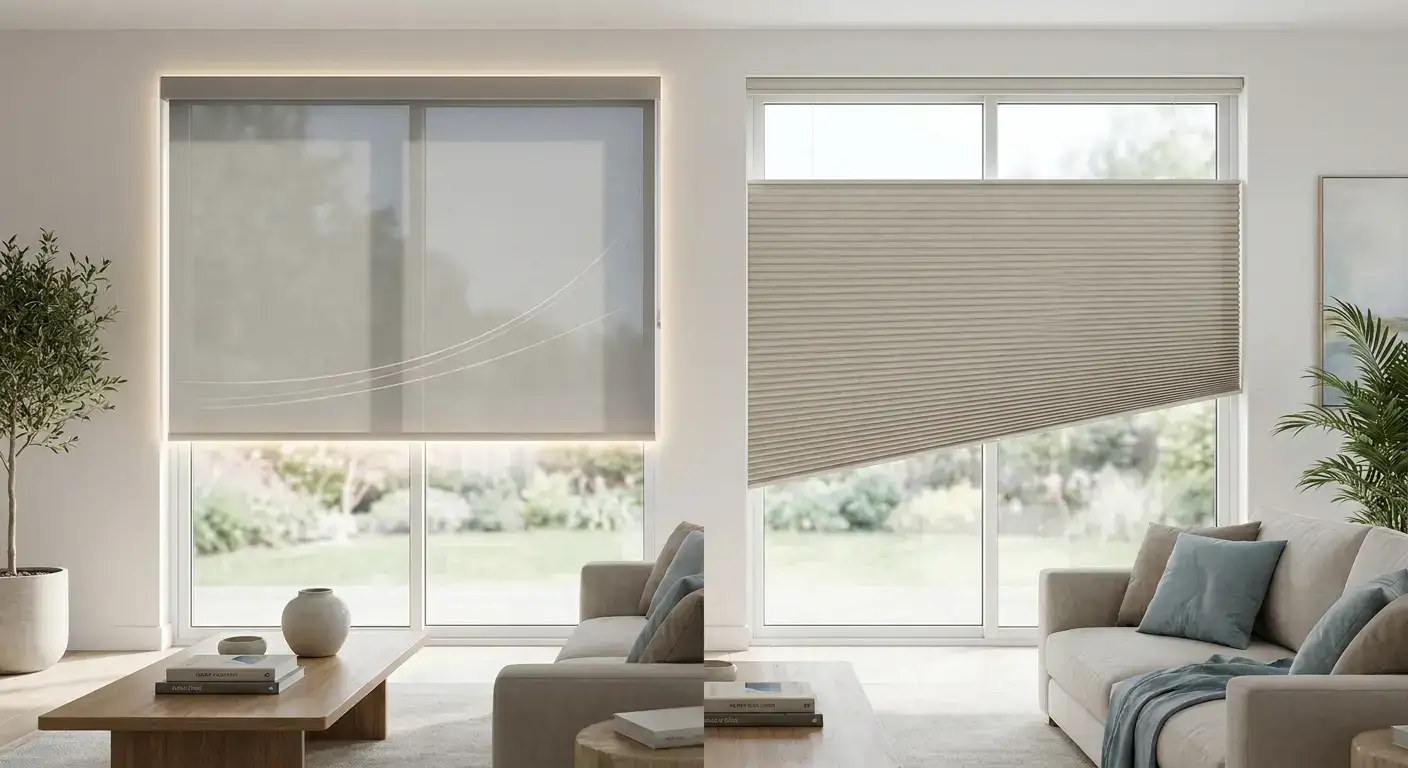
- Ground-floor and street-facing suites: Top-down/bottom-up cellular shades or adjustable 2-inch faux wood slats block sidewalk visibility at eye level while letting daylight enter through the top portion of the glass.
- Executive offices and boardrooms: Dual-roller brackets combine a light-filtering solar screen with a 100% blackout shade set inside side channels, providing complete privacy for sensitive meetings and darkening rooms for video calls or projector use.
Outfitting your building with custom commercial window treatments creates a unified exterior look and reduces air conditioning demand during peak afternoon heat. Commercial-grade materials such as 8-gauge aluminum mini-blinds, NFPA 701 fire-rated roller fabrics, and moisture-resistant faux wood slats withstand heavy daily operation in busy workplaces. Advance Blinds matches specific window shade types to your window glazing specifications, sun exposure angles, and daily team schedules.
Types of Office Blinds Solutions
Four core office blinds solutions manage solar heat gain, eliminate monitor glare, and maintain interior privacy across commercial buildings: solar roller shades, cellular honeycomb shades, horizontal Venetian blinds, and vertical blinds. Each system combines distinct fabric weights, weave patterns, and operating hardware to regulate daylight across individual floor zones. Matching the specific window covering to each work area removes harsh screen reflections and cuts commercial HVAC cooling demand by up to 25%.
Window orientation, glazing size, and room purpose determine the ideal fabric openness factor. South- and west-facing glass demands dark solar mesh with a 1% to 3% openness factor to stop heavy afternoon glare, whereas north- and east-facing elevations work best with 5% to 10% openness to preserve exterior views and ambient daylight. Presentation rooms and media suites require blackout shades paired with aluminum side tracks to block 100% of edge light bleed around video displays. Shared workstation zones benefit from light-filtering options that soften incoming sunbeams across desks without plunging the room into darkness.
| Window Covering System | Ideal Workspace Application | Key Performance Specifications | Commercial-Grade Materials |
|---|---|---|---|
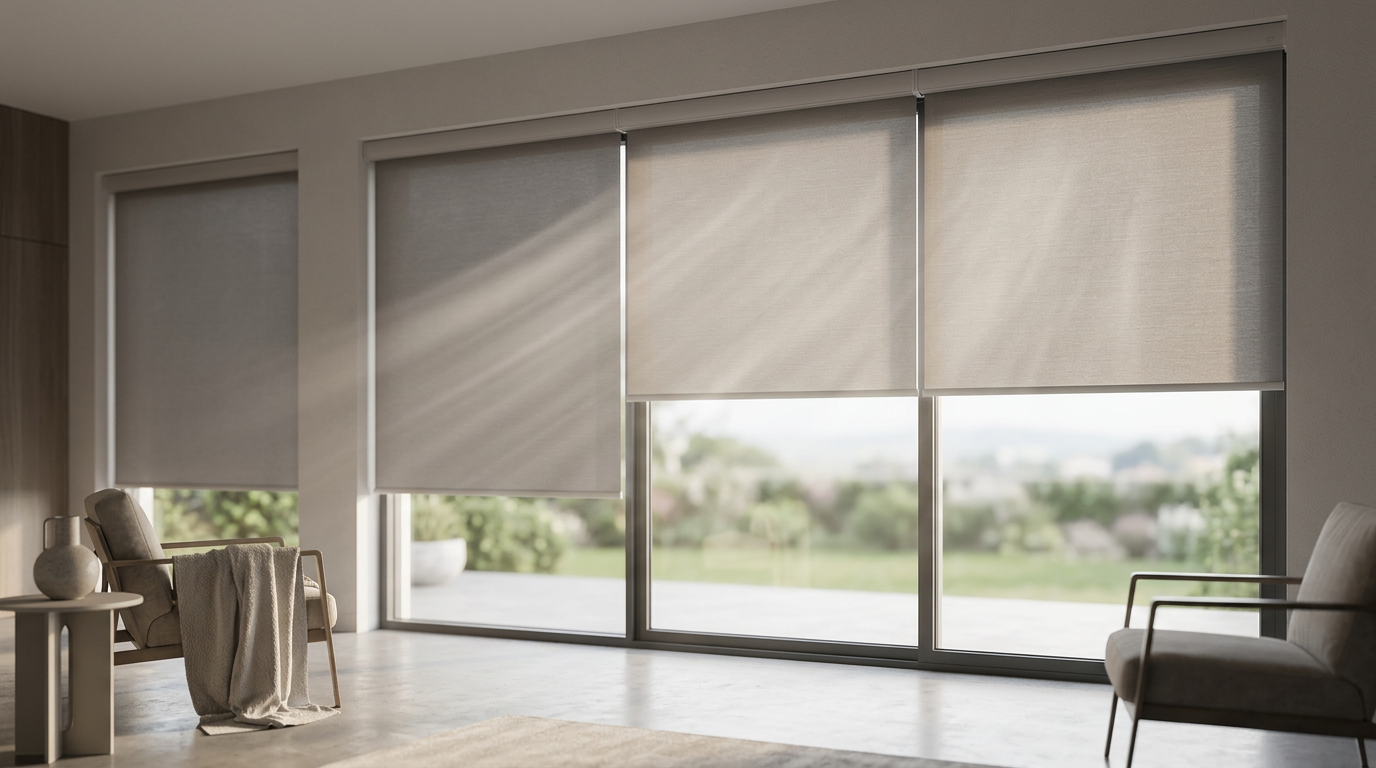
| Solar Roller Shades | Open-plan workstations, perimeter curtain walls | Monitor glare control, daytime outward visibility, 90% to 99% UV filtration (1% to 10% openness) | PVC-coated fiberglass or polyester screen mesh (NFPA 701 flame-certified) |
| Cellular Shades | Executive suites, temperature-sensitive zones | Thermal retention (R-value of 4.0+), sound dampening (NRC up to 0.55), soft light diffusion | Single-cell or double-cell spunlace non-woven polyester |
| Venetian Blinds | Private offices, interior glass office walls | 180-degree slat pitch adjustment, targeted visual privacy, ventilation control | 25mm (1-inch) anodized aluminum, 50mm (2-inch) kiln-dried basswood or PVC composite |
| Vertical Blinds | Conference rooms, atrium glass, patio sliders | Floor-to-ceiling coverage, easy doorway pass-through, 180-degree vane rotation | 89mm (3.5-inch) architectural textiles, rigid PVC louvers, micro-perforated aluminum |
Benefits of Professional Office Blinds Installation
Certified installers mount office blinds solutions to strict architectural tolerances, preventing side-channel light leaks, roller friction, and ANSI/WCMA S100.1 safety infractions. Trained field crews fasten heavy-duty brackets directly into poured concrete, 20-gauge steel studs, or aluminum curtain-wall mullions to carry wide shade spans and high-torque motorized tubes. Advance Blinds outfits multi-story commercial buildings with laser-leveled shading systems that keep 5- to 10-year factory warranties intact and extend hardware longevity.
| Pros | Cons |
|---|---|
| Three-point laser measurements maintain a strict 1/16-inch tolerance to stop perimeter light bleed. | Booking certified installation crews adds 15% to 25% above supply-only DIY material pricing. |
| Substrate-matched fasteners prevent mounting brackets from pulling free and stop track deflection. | On-site installation demands coordination around active business hours and tenant schedules. |
| Complete adherence to NFPA 701 flame-retardant rules, cord tension laws, and municipal building codes. | Future motor limit resets or bracket adjustments require a separate billable service visit. |
| Laser-aligned cassettes provide consistent interior glare reduction and a uniform exterior building appearance. | Multi-floor commercial deployments need dedicated staging areas and reserved freight elevator windows. |
| Maintains 5- to 10-year manufacturer warranty coverage on tubular motors and internal clutch mechanisms. | Ordering commercial-grade shading hardware carries a 2- to 4-week factory production lead time. |
Achieve Exact Fit and Frictionless Operation
Installation crews take three-point laser measurements across the window header, sill, and diagonal to adjust for out-of-square commercial framing. Plumbing the top cassette within a 1/16-inch tolerance stops fabric telescoping, crooked hem bars, and edge fraying during daily operation. Exact mounting clearances keep custom window treatments tight against the glass or side channels, cutting screen glare and maintaining a clean street-facing exterior.
Extend Hardware Lifespan and Structural Reliability
Commercial window shading demands surface-specific anchors, including #10 self-drilling tek screws for aluminum mullions or heavy-duty toggle bolts for steel-stud drywall assemblies. Aligning fastener shear capacity with the dead weight and rotational torque of the roller unit stops headrail deflection and early clutch wear. Placing mounting brackets within 2 inches of each end idle plug spreads mechanical loads evenly, cutting repair costs and lengthening the operational life of your window coverings.
Choosing the Right Office Blinds for Your Space
Seven measurable factors dictate which commercial office blinds solutions fit a workspace: glass orientation, monitor glare control, room privacy, per-unit price, material lifespan, operating hardware, and window opening depth. Pairing the right fabric weave openness and slat material with a building’s floor plan stops afternoon screen glare and reduces air conditioning loads by rejecting up to 80% of solar heat gain at the windowpane.
Record the width, height, and recess depth of every window frame to the closest 1/8 inch and map direct sun angles across workstations before ordering commercial treatments from Advance Blinds. Use the seven-step checklist below to specify office blinds solutions for your facility.
- Budget: Establish a per-opening cost cap that covers mounting hardware and commercial installation labor. Standard 1-inch aluminum Venetian blinds and PVC vertical louvers reduce initial material costs by 40% to 60% compared to custom hardwood slats or hardwired motorized roller systems.
- Light Control: Align fabric weave density with desk layouts and directional sun exposure. Solar mesh shades with a 1% to 5% openness factor stop harsh glare on south- and west-facing windows while preserving exterior sightlines, while 0% blackout rollers fitted with aluminum side channels block 100% of outside light in media rooms and boardrooms.
- Privacy Needs: Fit opaque roller fabrics or tilt-adjustable 2-inch horizontal blinds in human resources offices, executive suites, and ground-floor conference spaces. Combine 5% to 10% light-filtering roller shades with open-plan cubicles to bring in daylight while shielding confidential monitors from street-level pedestrians.
- Office Aesthetic: Coordinate louver widths, header valances, and neutral fabric colors with surrounding architectural finishes. Modern Office design trends prioritize recessed ceiling pockets and 3-inch or 4-inch anodized aluminum fascia cassettes that mount flush against drywall returns and curtain-wall mullions.
- Durability: Demand commercial-rated materials like NFPA 701 fire-retardant solar screen mesh, 8-gauge extruded aluminum louvers, or warp-resistant faux wood for busy corridors and staff breakrooms. Regular cleaning and maintenance prevents gritty dust accumulation on slats and keeps commercial clutches and lift mechanisms working reliably for 10+ years.
- Functionality: Install cordless spring-assist rollers or continuous stainless steel bead chains secured with anchored tensioners on accessible windows to satisfy ANSI/WCMA A100.1 safety codes. Specify low-voltage or line-voltage motorized shades wired to wall switches or automated building schedules for tall lobby glass and multi-window conference rooms.
- Window Type: Confirm mullion and frame depth prior to selecting inside or outside mounting brackets. Floor-to-ceiling curtain walls demand heavy-duty 2-inch to 3-inch extruded aluminum roller tubes or guided vertical tracks, while standard recessed openings with at least 2 inches of flat frame depth accommodate inside-mount horizontal blinds or cellular shades.
Office Blinds for Energy Efficiency and Light Control
Commercial windows account for 25% to 30% of a building’s total heating and cooling load, according to U.S. Department of Energy statistics. Fitting glass facades with thermally rated office blinds solutions lowers the window’s Solar Heat Gain Coefficient (SHGC) and raises its insulating R-value, cutting overall HVAC power consumption. Engineered window textiles also manage visible light transmittance (VLT), blocking up to 95% of monitor glare while distributing natural daylight across open-concept seating areas.
Facility managers pair specific mesh openness factors, exterior reflectivity ratings, and cellular air pockets with the solar orientation of each window wall. South- and west-facing glass demands dense weaves (1% to 3% openness) or metalized backings to reject intense afternoon heat, while north-facing elevations work well with 5% to 10% openness to pull in soft ambient light. Dark interior yarns absorb harsh brightness to give staff clear outward views past their computer screens, whereas white or aluminized outer layers bounce solar radiation back through the glass before it warms the room. Selecting performance-tested Commercial window treatments eliminates thermal hot spots beside window desks and reduces employee eye fatigue.
|
Office Blind System |
Thermal & Optical Specifications |
Best Commercial Application |
|---|---|---|
|
Cellular (Honeycomb) Shades |
Single- or double-cell air chambers achieve R-4.0 to R-5.0 insulation ratings, cutting winter heat escape by up to 40% and summer solar heat transfer by up to 60%. |
Perimeter offices, older glazing retrofits, and climate-sensitive workspaces. |
|
Solar Roller Shades |
Woven fiberglass or polyester-vinyl screens in 1%, 3%, 5%, or 10% openness factors block 90% to 99% of UV radiation and diffuse direct sunbeams without hiding exterior views. |
Open-plan desk rows, glazed curtain walls, and south- or west-facing facades. |
|
Blackout Roller Blinds |
Three-pass opaque fabrics paired with aluminum side tracks and bottom sill seals stop 99% to 100% of external light (0% openness) while providing light acoustic dampening. |
Boardrooms, AV presentation suites, media labs, and medical examination rooms. |
|
Motorized Shade Systems |
BACnet-compatible tubular motors, astronomical timers, and roof-mounted solar sensors track sun angles in real time. Automate adjustments to stabilize indoor temperatures and shave peak air-conditioning loads. |
High-reach atrium glass, multi-story commercial buildings, and smart offices. |
Find Your Ideal Office Blinds Solutions
Solar roller shades featuring a 1% to 5% openness weave stop 95% to 99% of incoming ultraviolet radiation and harsh screen glare. Selecting targeted office blinds solutions keeps computer monitors readable in bright sun, regulates interior workspace temperatures, and lowers air conditioning expenses during peak afternoon hours. For conference rooms and executive suites, dual-roller brackets equipped with motorized blackout textiles create immediate room darkening and visual privacy for private meetings and video projections.
Advance Blinds handles precise on-site measuring, custom fabrication, and professional fitting for commercial window treatments engineered around your building layout, natural light targets, and financial parameters. Schedule a site visit with Advance Blinds to evaluate solar openness grades and review material swatches directly under your workspace lighting.
FAQ
Choosing the right window treatments for a commercial workspace involves balancing light control, energy efficiency, and professional installation. Below, we answer common questions about office blinds solutions to help you select the best options for workplace comfort and productivity.
| Question | Answer |
|---|---|
| How do office blinds solutions improve workspace comfort, light control, and productivity? | Office blinds solutions regulate natural light and eliminate screen glare, which directly reduces eye strain and fatigue for employees during the workday. These window treatments also insulate windows to stabilize indoor temperatures and lower commercial heating and cooling costs. By adding privacy for meeting rooms and controlling room brightness, the right blinds create a distraction-free workspace that supports daily productivity. |
| How do roller shades improve light control and privacy in an office workspace? | Roller shades regulate natural light and privacy through varying fabric opacities, ranging from solar screens that reduce monitor glare by up to 95% to blackout materials for complete darkness during boardroom presentations. Light-filtering fabrics allow daylight into open workspaces while obstructing outside views, protecting confidential work and reducing eye strain. Their compact, minimalist profile fits flush within window frames, saving space around desks and office equipment. |
| Which features make cellular shades an energy-efficient choice among office blinds solutions? | Cellular shades feature a honeycomb pocket design that traps air at the window, making them a top energy-efficient option among office blinds solutions. This insulating barrier slows heat transfer to maintain consistent indoor temperatures and lower seasonal heating and cooling expenses. Available in single-, double-, and triple-cell profiles, these shades also absorb ambient workspace noise and filter harsh screen glare. |
| Why should businesses hire a professional to install office blinds solutions? | Hiring a professional installer guarantees exact window measurements so your office blinds solutions fit the frame without light gaps. Commercial technicians mount brackets securely into concrete, drywall, or metal studs while meeting workplace safety codes for cords and motorized tracks. Proper fitting extends hardware lifespan, prevents daily operational jams, and keeps manufacturer warranties intact. |