
Answer
Upgrading your window treatments cuts thermal transfer through glass by up to 50%, directly lowering household utility usage. Installing energy efficient shades stabilizes indoor climates, which reduces winter heating bills and cuts summer air conditioning costs. Advance Blinds: Blinds, Shades & Drapery In Manitoba guides property owners through choosing and fitting insulated window coverings that deliver year-round climate control and measurable cost reductions.
Overview
Window coverings directly control indoor thermal performance, heating loads, and year-round room comfort. Specific shade constructions trap air at the glass surface to improve window insulation, allowing homeowners to pick exact configurations for each room. Proper mounting setups and routine cleaning practices preserve these thermal benefits over decades of daily use.
A practical scenario featuring Brenda demonstrates how to select window treatments for measurable utility savings. Her comparison highlights how cell structure and operating hardware change a home’s seasonal heating and cooling demands.
- Shade Types: Compare cellular vs. honeycomb shades and examine their core insulating properties.
- Bill Reduction: Review how energy efficient shades cut monthly heating and cooling expenses across all four seasons.
- Real-World Example: Follow how local homeowners choose shades for extreme seasonal weather.
- Installation Process: Review the step-by-step requirements when installing new shades inside or outside the window casing.
- Comfort Boost: Check the ways custom window treatments improve home comfort, glare control, and room acoustics.
- Care Tips: Follow safe cleaning methods to maintain your shades and protect their insulating fabric pleats.
Cellular vs. Honeycomb Shades Energy Savings
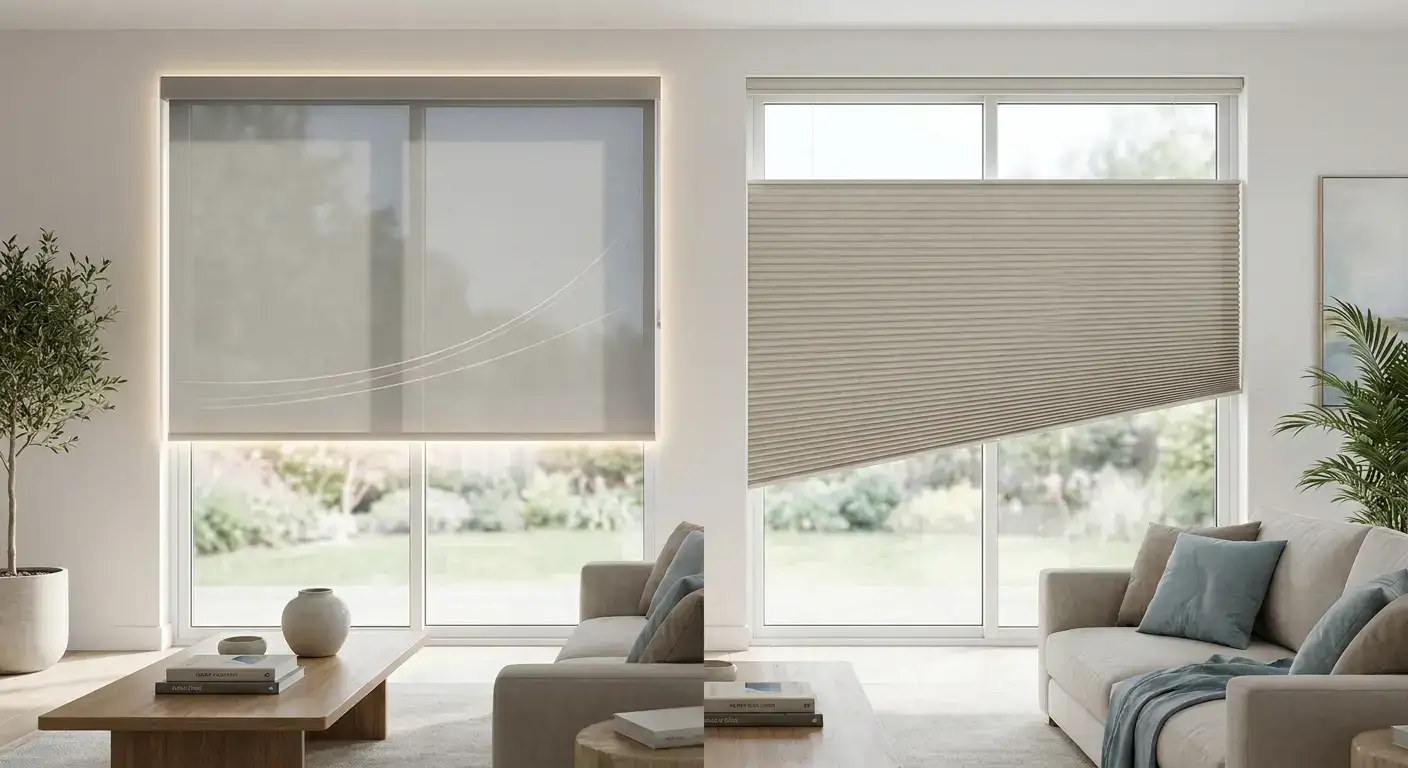
Window covering architecture directly determines thermal efficiency, and cellular and honeycomb designs deliver measurable advantages for lowering household utility costs. Both styles trap stationary air inside structured pockets to create a thermal barrier against glass panes. This barrier slows conductive heat transfer, keeping heated air indoors during winter and blocking solar heat gain throughout summer.
Standard cellular shades use a single row of hexagonal pockets, whereas multi-cell honeycomb shades stack double or triple layers of cells to boost R-value and thermal resistance. Double- and triple-cell models perform best on windows with heavy direct sunlight or in rooms needing strict climate control. Advance Blinds supplies custom Energy Efficient blinds engineered to stabilize indoor temperatures and cut monthly heating and cooling expenses.
| Feature | Single-Cell Cellular Shades | Multi-Cell Honeycomb Shades |
|---|---|---|
| Cell Structure | One layer of hexagonal air pockets. | Two or three stacked layers of hexagonal air pockets. |
| Thermal Insulation | Reliable baseline insulation from a single column of trapped air. | Maximum thermal resistance from multiple interlocking air barriers. |
| Energy Savings | Lowers HVAC workload when mounted tightly inside the window frame. | Delivers higher utility savings for large glass expanses and extreme weather zones. |
| Window Application | Suited for standard windows and moderate seasonal climates. | Built for high-exposure windows, drafty frames, and acoustic dampening. For additional choices, consider Energy Efficient shades. |
| Light and Privacy | Offered in sheer, light-filtering, and room-darkening fabrics. | Provides dense light control and complete privacy across multiple fabric weights. |
How Energy Efficient Shades Reduce Bills
Windows account for up to 30% of residential heating and cooling energy loss. Energy efficient shades lower monthly utility expenses by forming a thermal barrier directly over the glass. This layer traps indoor warmth during winter and blocks solar heat gain during summer, which reduces the daily runtime of furnaces and air conditioners to cut electricity and natural gas usage.
Installing insulating window coverings reduces heat transfer through window glass by up to 50%. For Manitoba homeowners, cutting this thermal exchange protects indoor spaces against extreme winter freezes and intense summer heatwaves while stabilizing room temperatures year-round.
Cellular and honeycomb shades combine structured air pockets with adjustable light diffusion to maximize window insulation. Pairing these fabrics with motorized controls allows homeowners to schedule shade positions based on sunlight hours and outdoor temperatures. Upgrade Your home with automated window coverings to maintain peak thermal efficiency throughout the day, even while the house is unoccupied.
| Factor | Impact on Energy Bills |
|---|---|
| Insulation | Slows thermal transfer across window panes, lowering seasonal heating and cooling expenses. |
| Solar Heat Gain Reduction | Deflects intense summer sunlight before it heats the room, reducing air conditioning demand. |
| Natural Light Optimization | Filters harsh glare into soft daylight, cutting down on daytime artificial lighting costs. |
| Draft Protection | Covers window frame perimeters to stop cold winter drafts and warm air leaks. |
| Motorization | Schedules shade movement by time or temperature sensor to maximize the performance of energy efficient shades. Upgrade Your home for hands-free climate control. |
Choose Shades for Manitoba Homes
Manitoba homeowners face high heating and cooling bills across extreme seasonal shifts. Upgrading your Window coverings directly increases window insulation and cuts monthly utility bills.
Brenda is comparing the upfront price of standard blinds against the long-term savings of energy efficient shades for her Winnipeg, Manitoba house. She wants to lower her monthly Hydro bills and pick the option with the best multi-year return. Should Brenda install cellular shades or buy lower-priced standard blinds to control indoor temperatures and heating costs in Winnipeg?
Recommendation: Cellular Shades
Advance Blinds recommends cellular shades for Manitoba homeowners who want maximum thermal protection. Honeycomb air pockets trap air at the glass surface, blocking winter drafts and summer heat gain to reduce annual heating and cooling costs.
Install Your New Energy Efficient Shades
Inside-mount installations with a 0.125-inch to 0.25-inch side clearance reduce air gaps and boost the R-value of energy efficient shades. Tight seals along the window casing block drafts and maximize thermal insulation. Advance Blinds technicians take laser measurements for every window to guarantee an exact fit.
Each installation starts with verifying the opening dimensions and prepping the casing. Installers anchor the hardware, lock the headrail in place, and calibrate the lift mechanism so homeowners capture the full thermal savings of their window coverings.
- Double-check all window opening widths, heights, and shade dimensions. Exact sizing creates a snug seal that blocks conductive heat transfer.
- Clean the window casing and locate wall studs or solid framing for heavy-duty screw anchorage. Solid backing prevents hardware from pulling loose over time.
- Fasten the mounting brackets to the frame using the manufacturer’s specified spacing. Level bracket alignment keeps the shade stable during daily use.
- Snap the headrail into the mounted brackets and verify with a spirit level that the unit hangs straight and glides without friction.
- Cycle the shade up and down to check the lift cords, tensioners, or motor drives. For battery powered shades, technicians verify battery pack voltage and smooth motor response.
- Set the upper and lower travel limits on motorized units for exact stopping points. This step includes pairing wands or remotes for SoftTouch motorization.
- Run a complete safety and hardware check to confirm tight bracket screws and even side light gaps. Advance Blinds completes these installation services on every residential and commercial project.
Boost Home Comfort with Our Shades
Direct sunlight management and insulating windows control indoor room temperatures throughout the year. Installing energy efficient shades eliminates winter drafts near glass surfaces and blocks intense summer solar heat gain, keeping living spaces at steady, comfortable temperatures.
Automated window treatments simplify daily operation for high, out-of-reach windows and allow homeowners to schedule shade movements around peak sunlight hours. Setting shades to lower automatically during afternoon heat spikes keeps rooms cool without manual intervention. Advance Blinds: Blinds, Shades & Drapery In Manitoba matches households with motorized shade configurations that fit daily schedules and thermal performance requirements.
Upgraded control systems carry a higher upfront price tag, yet the daily convenience and automated thermal protection deliver strong long-term value for Winnipeg, Manitoba homeowners. Properties with multiple windows benefit from remote access and mobile app connectivity. SoftTouch motorization delivers simple wand-controlled cordless movement, whereas PowerView Automation runs full-home custom schedules.
| Feature | Benefit for Home Comfort | Consideration |
|---|---|---|
| Motorization | Hands-free, scheduled movement of window coverings. | Higher upfront cost offset by daily operational ease. |
| Insulating Fabrics | Slows conductive heat transfer across window glass. | Reduces incoming daylight when fully lowered. |
| Light Control | Cuts screen glare and secures indoor privacy. | Fabric opacity levels dictate room brightness. |
Maintain Your Energy Efficient Shades
Routine upkeep preserves the insulating properties of energy efficient shades and blocks thermal transfer across window panes. Consistent surface cleaning and hardware checks allow window coverings to operate reliably for years while keeping living spaces looking clean and well-kept.
Airborne dust and kitchen grease dictate your cleaning schedule. Wipe fabrics weekly using a soft microfiber cloth or feather duster to stop particles from settling into the pleats. For heavier buildup, run a handheld vacuum with a soft brush attachment on low suction across the pleats. Avoid harsh chemical solvents, as abrasive liquids strip the thermal coatings on cellular and honeycomb fabrics. Homeowners with smart blinds The motors and optical sensors also need routine inspections to verify accurate positioning and smooth travel.
Advance Blinds: Blinds, Shades & Drapery In Manitoba advises checking lift cords, control wands, and drive tracks once a year for fraying or friction. Catching minor mechanical resistance early prevents excess strain on internal gears and keeps panels moving freely. Fix sluggish movement in motorized units right away to avoid costly motor replacements. Battery-powered smart home blinds also need scheduled recharging or fresh battery packs to maintain consistent daily schedules.
FAQ
Choosing the right window treatments can make a noticeable difference in your home’s indoor comfort and overall heating and cooling costs. Explore the common questions below to learn how energy efficient shades insulate your windows and how to select the best styles for your local climate.
| Question | Answer |
|---|---|
| How do energy efficient shades insulate windows and lower home heating and cooling costs? | Energy efficient shades, such as cellular and honeycomb styles, trap air inside structured fabric pockets to create a thermal barrier across your window glass. This trapped air layer blocks indoor heat from escaping during the winter and prevents solar heat from entering during the summer. By slowing heat transfer through your windows, these coverings reduce the runtime of your heating and cooling systems and directly lower your monthly utility bills. |
| Which styles of energy efficient shades offer the best window insulation? | Cellular and honeycomb styles rank as the most effective energy efficient shades because their structured air pockets create a thermal barrier directly against the glass. Roman shades fitted with thick thermal linings also slow down heat transfer, blocking cold winter drafts and summer heat gain. Pairing these insulating window coverings with motorized smart controls allows you to automate opening and closing schedules based on daily sunlight, further lowering heating and cooling bills. |
| How does installing energy efficient shades reduce utility bills and improve indoor comfort? | Energy efficient shades use cellular or honeycomb air pockets to trap air at the window, forming an insulating barrier that limits heat transfer. By keeping indoor spaces warmer in winter and cooler in summer, these window coverings reduce the workload on heating and cooling systems and lower monthly utility bills. Beyond stabilizing room temperatures, they block harsh UV rays from fading furniture and dampen outside noise. |
| How do you select the best energy efficient shades for your windows and climate? | Select the right energy efficient shades by matching the fabric thickness and cellular construction to your local climate and window orientation. South- and west-facing windows benefit from blackout or solar fabrics that block intense afternoon heat, while double-cell honeycomb designs retain indoor warmth in colder weather. Compare light control, privacy levels, and thermal ratings to find a style that lowers your utility bills and fits your home decor. |