![Custom window blinds and drapery solutions at Advance Blinds & Drapery, serving [Your Location], offering stylish, functional window coverings, professional installation, and expert consultation.](https://spcdn.shortpixel.ai/spio/ret_img,q_cdnize,to_webp,s_webp/advanceblindsanddrapery.com/wp-content/uploads/2025/09/Advance-Blinds-Drapery-Logo.png)

Understanding Window Treatment Light Control
Window treatment light control refers to the ability of blinds, shades, or drapes to manage the amount of natural light entering a room. This impacts privacy, energy efficiency, and overall ambiance. This control ranges from complete darkness to soft, diffused light, allowing homeowners to customize their environment.
The effectiveness of various window treatments in controlling light depends on factors like material, opacity, and design. For example, some opacities are specifically designed to block nearly all incoming light, which is essential for bedrooms or media rooms. A comprehensive guide to decoding window treatment opacities provides further insights.
Achieving optimal light control often begins with a thorough window treatment consultation. Experts can assess your specific needs and recommend tailored solutions. This personalized approach ensures your custom window treatments complement your interior design and deliver the desired light management. We also offer consultations for expert advice on window treatment consultations.
Types of Window Treatments for Light Control
Different types of window treatments offer distinct advantages for managing natural light. Understanding these variations is key to achieving optimal window treatment light control, from dimming a room to complete darkness to softening harsh sunlight. Each style provides a unique balance of aesthetics, privacy, and light-filtering capabilities.
Whether you prioritize privacy, energy efficiency, or a specific ambiance, the right window covering can significantly impact a room’s functionality and comfort. Examining the features of popular options helps in making an informed decision for your living spaces. Learn more about which option is right for your home in our guide on shades vs blinds.
Sheer and Light-Filtering Treatments
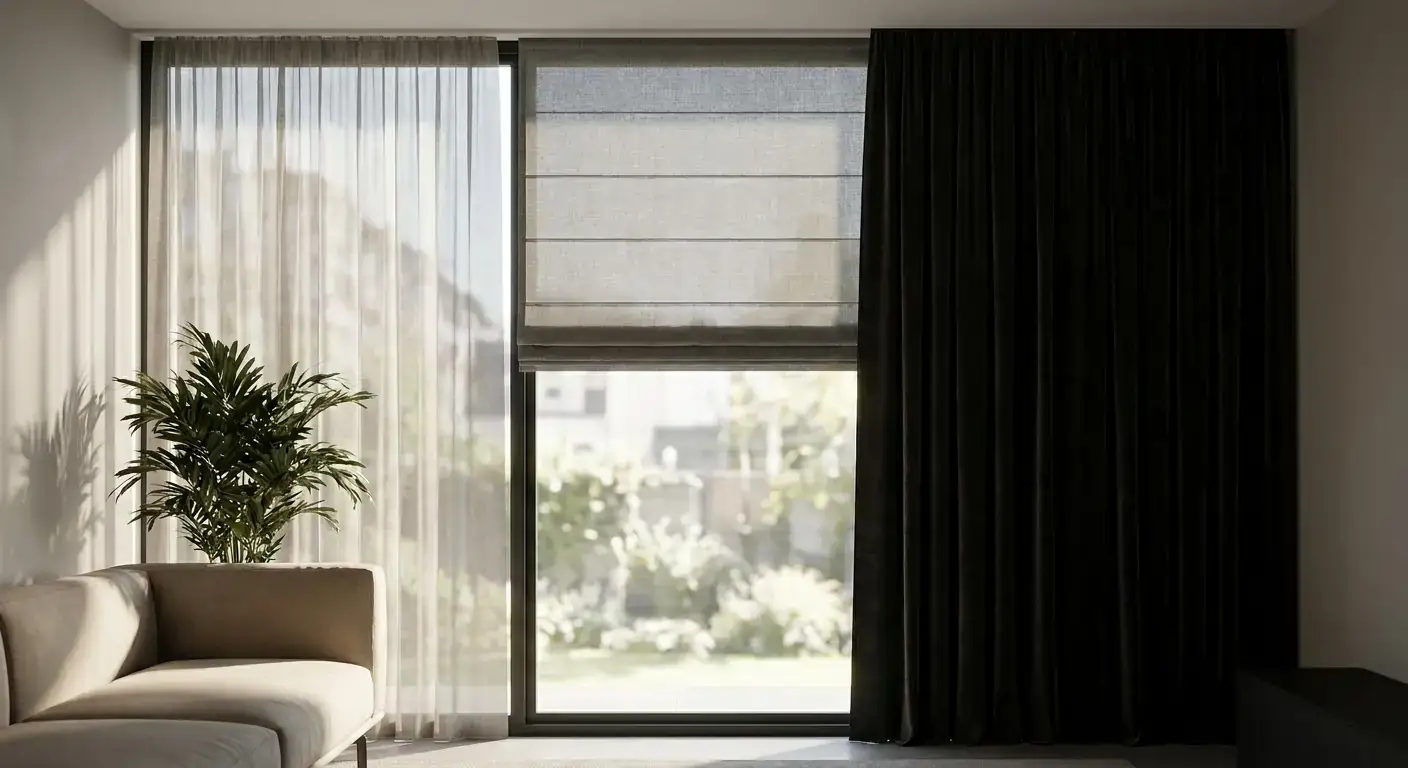
Sheer and light-filtering window treatments gently diffuse incoming sunlight, reducing glare while still allowing natural light to brighten a room. These options are perfect for spaces where maintaining a bright, airy feel is important, such as living rooms or dining areas. Examples include sheer curtains, some types of cellular shades, and certain roller shades.
Room-Darkening and Blackout Solutions
For areas requiring significant light reduction, such as bedrooms, media rooms, or nurseries, room-darkening and blackout shades are ideal. These treatments are constructed from opaque materials or feature special linings that block almost all incoming light. Popular choices include blackout roller shades, cellular shades with blackout liners, and drapes made from dense fabrics.
Adjustable Louvered and Slat Treatments
Window treatments with adjustable louvers or slats provide unparalleled flexibility in light control. Blinds and shutters fall into this category, allowing you to precisely direct and filter sunlight by tilting their components. This adjustability means you can angle the slats to diffuse light, block it, or open them completely to maximize natural illumination. They also offer excellent privacy control.
Factors for Optimal Light Control
Selecting the ideal window treatment light control for your home involves considering several key factors to ensure comfort, privacy, and energy efficiency. The functionality of each room plays a crucial role in determining the best solution.
Understanding these elements helps in making informed decisions that enhance both the aesthetics and practicality of your living spaces. When you want to find the best solutions for large window treatment ideas, a consultation can help.
- Room Function. The purpose of a room dictates the level of light control needed; for instance, bedrooms often require more darkness than living rooms.
- Natural Light Exposure. South-facing windows receive intense sunlight, requiring treatments that can effectively manage glare and heat gain. Prairie climate window solutions are important for managing this.
- Privacy Needs. Areas like bathrooms or street-facing windows benefit from treatments offering complete privacy without sacrificing natural light. This is especially true for high-rise window treatments privacy.
- Aesthetic Preferences. The visual style of your home and personal taste influence the choice of materials, colors, and designs for window treatments. A window treatment consultation benefits homeowners by providing expert guidance tailored to their style.
- Energy Efficiency Goals. Treatments with insulating properties can help reduce heating and cooling costs by minimizing heat transfer through windows.
Advanced Light Control Features and Automation
Modern window treatment light control extends beyond traditional manual adjustments, incorporating innovative features and smart home integration. These advancements transform how you manage natural light, enhancing both convenience and energy efficiency. Advanced systems allow for precise control over light levels, privacy, and even room temperature with minimal effort.
Homeowners can explore the nuances between smart vs manual blinds to determine the best fit for their home. Understanding the motorized blinds cost can also help in planning budgets effectively while achieving optimal light control.
| Feature | Manual Control | Motorized Control |
|---|---|---|
| Cost | Lower upfront | Higher upfront |
| Convenience | Direct physical adjustment | Remote, app, or voice control |
| Precision | Good | Excellent |
| Safety | Cordless options available | Inherently cordless |
| Integration | Limited | Smart home integration possible |
Many homeowners compare systems like Powerview vs Softtouch motorization for seamless integration into their smart living spaces. These systems offer superior control, often with the touch of a button or a voice command, allowing easy adjustment of window treatments throughout the day.
Choosing the Right Light Control for Your Home
Selecting ideal custom window treatments and light control for your home involves several considerations, ensuring both aesthetic appeal and functional performance. A personalized approach yields the best results for your desired ambiance.
Consider the specific needs of each room and your interior design style. A bedroom might prioritize blackout capabilities, while a living room benefits from versatile light filtering. Informed decisions enhance comfort and energy efficiency.
Understanding distinctions between options like blinds vs. shutters can help narrow choices. We recommend consulting with experts to navigate the wide array of solutions available for optimal window treatment light control.
Key Steps for Selection
- Assess Your Needs: Evaluate the required privacy and light control for each room, considering sun exposure and specific activities.
- Explore Treatment Types: Research various window treatment styles, including blinds, shades, and drapery, to understand their light-controlling properties.
- Consider Material and Opacity: Pay attention to the material and opacity. Sheer fabrics allow light, while blackout options provide complete darkness.
- Seek Professional Guidance: Schedule a window treatment consultation to discuss preferences and receive expert recommendations.
Conclusion: Mastering Ambiance with Light Control
Achieving optimal window treatment light control is key to enhancing your home’s comfort and aesthetic appeal. By understanding the various options and how they interact with natural light, you can create the perfect ambiance in every room, whether you prefer soft, diffused light or complete darkness for ultimate privacy.
Thoughtful selection of blinds, shades, or drapery allows you to manage glare, protect furnishings, and even improve energy efficiency. Exploring options like smart home blinds automation can further simplify this process, offering convenience and precision at your fingertips. If you are comparing shades vs blinds, consider all the benefits of each.
We encourage you to explore the diverse range of solutions available to meet your specific needs. Our team can provide a window treatment consultation to help you find the ideal products. Discover how custom window treatments can transform your living spaces, offering both beauty and functionality.