
Answer
Understanding how lightlock shades block light and compare to blackout shades comes down to the patent-pending side channel design that captures and deflects light rays where standard room-darkening fabrics leave perimeter gaps. By upgrading to the LightLock™ system, homeowners seal off window borders to achieve an unprecedented level of true room darkness that ordinary shades cannot match. Advance Blinds expertly outfits local homes with this innovative technology to deliver superior sleep environments and premium daytime light control.
Overview
Homeowners evaluating window treatments often debate between standard room-darkening fabrics and specialized channel systems when trying to resolve stubborn edge glow. Reviewing how LightLock® shades block light and compare to blackout shades reveals the mechanical differences that prevent light leakage along glass perimeters. The following breakdown includes a labeled real-world hypothetical showing how a shift worker resolves glare and daylight sleep disruptions.
Each section outlines the hardware engineering, direct fabric comparisons, and mounting requirements needed to achieve true darkness indoors.
- Darkness Mechanics: learn how micro-ridges inside side channels deliver complete room darkness.
- Hardware Comparison: contrast edge gap control by evaluating standard shades against traditional blackout shades.
- Real-World Example: review a practical scenario resolving morning daylight in a Manitoba bedroom.
- Selection Criteria: match cell construction, fabric opacity, and frame depth when choosing the right shade.
- Operating Systems: assess dual-opacity options and flexible positioning with LightLock Flex control.
- Professional Installation: evaluate precision mounting and custom laser measuring with Advance Blinds.
LightLock Perimeter Channels Stop Edge Gaps
Fabric opacity numbers reveal only half of the story because standard ratings assess light penetration through textiles while ignoring the bright glow around window perimeters. Achieving true room darkening demands containment at the outer borders where untreated rollers and shades routinely leak sunbeams.
Hunter Douglas LightLock™ technology resolves edge leaks by encasing fabric borders within patented, micro-ridged U-shaped channels. Our installers mount these continuous tracks directly into the window casing, capturing stray rays before they escape into the interior. Sleeping rooms, media hubs, and nurseries achieve near-complete dark coverage because raw rays hit an internal light-absorbing baffle instead of bouncing around the frame.
| System Component | Darkening Function |
|---|---|
| Patented U-Shaped Side Channels | Rowed micro-ridges absorb peripheral rays and eliminate window frame halos. |
| Flush Frame Mounting | Custom measures establish a mechanical fit against interior casings to seal border gaps. |
Prolonged evening sun regularly disrupts family bedtimes across rural and urban neighborhoods in the prairie summer. Advance Blinds installs custom blackout assemblies to block late rays across southern Canadian homes, allowing children to fall asleep promptly and homeowners to operate home entertainment setups without sun glare on screens.
Light Blocking Performance of LightLock Against Standard Room Darkening Systems
Blackout shades for total darkness often fail to create complete obscurity because normal window casings permit edge illumination. Even when room-darkening textiles intercept direct sun exposure, perimeter clearance gaps allow unshielded beams to seep past the frame margins. Hunter Douglas engineered the LightLock® system specifically to address this light leakage, capturing and absorbing residual rays along the perimeter.
U-shaped grooved tracks mount directly into the window jamb, guiding the shade fabric securely down both edges. Micro-ridges lining the interior surface of these channels deflect scattered light waves before they can spill into the room. This channel geometry removes the bright halo perimeter typical of inside-mount roller and honeycomb fixtures, which makes it an ideal upgrade for nursery quarters, dedicated screening rooms, and bedrooms facing direct morning sun. During Manitoba summers, when evening sun lingers past 10 PM in Winnipeg, our installers place these tracking tracks in bedrooms so shift workers and children maintain steady sleep cycles.
| Performance Attribute | LightLock® System | Conventional Blackout Coverings |
|---|---|---|
| Light Interception Method | Specially engineered side channels enclose fabric edges to trap stray rays. | Opaque materials restrict light through the center, leaving unsealed side gaps. |
| Perimeter Light Leakage | Eliminates edge halos using grooved interior light-absorbing micro-ridges. | Displays visible glowing borders along the window casing. |
| Achieved Room Darkness | Provides near-complete blackout performance under full noon sun. | Softens indoor glare while permitting peripheral brightness. |
| Fitting Precision | Requires precise inside-mount measurements for secure channel alignment. | Tolerates standard inside or outside mounting clearances. |
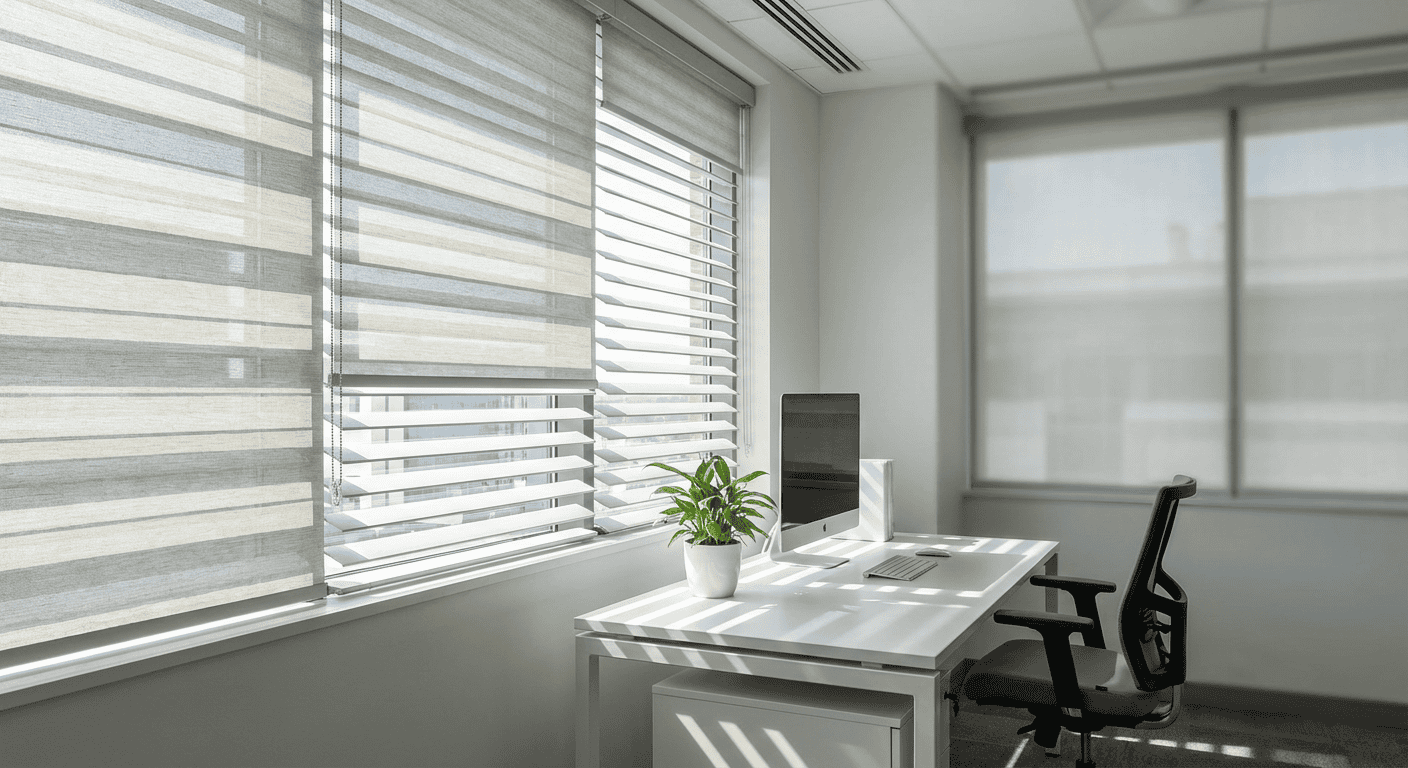
Duolite® shades dual function designs can also integrate with channel systems to balance filtered daylight during morning hours with absolute obscurity at night. Advance Blinds measures each frame to millimeter accuracy so the side tracks seal flush against the window casing without binding the operating components.
Stopping Perimeter Light Leaks in Character Homes
Historic residential architecture throughout Winnipeg presents specific challenges for bedroom sleep environments. Homeowners like Eleanor discover that conventional drapery setups still permit strong early morning rays to seep past casing margins, disrupting rest even with thick fabric hanging over the aperture. For properties featuring deep or intricate wood casings, specialized custom measures ensure that modern room-darkening hardware integrates cleanly into shallow jambs without altering antique woodwork.
Advance Blinds installs Hunter Douglas LightLock® systems specifically to eliminate these troublesome edge gaps. The technology relies on a patent-pending side-channel design lined with micro-ridges that deflect, capture, and absorb stray daylight before it enters the room. Selecting reliable blackout solutions for older prairie residences requires addressing both the fabric opacity and the physical perimeter tolerances.
Reviewing our analysis of blackout shades for total darkness illustrates how side-channel hardware outperforms standard window dressings. By mounting snug U-shaped tracks directly inside the window opening, the assembly forms an unbroken barrier along every border, making it a reliable investment for any sleeping area exposed to intense directional sun.
Key Factors for Selecting LightLock Systems
Selecting the ideal window darkening setup requires evaluating exact frame casing depth, glass orientation, and the daylight conditions in your living space. Because Hunter Douglas LightLock® technology relies on patent-pending U-shaped side channels with micro-ridges to trap incoming rays, accurate structural assessments ensure complete edge coverage.
Arranging custom measures with Advance Blinds eliminates guesswork by verifying whether your casing profile supports an inside mount. If you want versatile day-to-night flexibility rather than permanent blackout conditions, pairing fabrics via Duolite® shades dual function setups allows natural illumination alongside opaque privacy. Homeowners reviewing various opaque fabrics can also study our blackout shades guide to weigh standard assemblies against channel-sealed products.
Review these specific space requirements before ordering:
- Room Purpose: Media rooms, shift-worker suites, and nurseries benefit most from total blackout profiles, whereas casual dens or kitchen breakfast nooks usually only require moderate anti-glare filtering.
- Frame Casing Depth: Side channels demand adequate recess depth inside the frame trim so the cellular fabric glides unobstructed without compromising seal integrity.
- Solar Path and Exposure: Unshielded east-facing morning windows and intense south-facing panes generate intense halo effects that standard hanging shades cannot contain.
- Operational Mechanics: Decide whether your household prioritizes cordless hand adjustment or integrated automated controls for high or hard-to-access frames.
Hunter Douglas LightLock™ Flex Solutions for Challenging Window Frames
Non-standard framing often prevents standard channel hardware from securing a flush perimeter. Hunter Douglas developed the LightLock™ Flex design specifically to bridge that gap, applying patent-pending micro-ridges inside adaptable side rails that secure uneven casings without compromising light interception.
Advanced operating systems integrate directly with these adaptable channels, enabling smooth vertical tracking along narrow jamb depths that cannot accommodate standard profiles. Specialized residential applications benefit directly from this adaptable architecture:
- Home media rooms requiring complete screen contrast without halo glare around decorative architectural casing.
- Lower-level sleeping suites where window wells produce intense angled reflection against irregular trim.
- Older heritage residences featuring settling or out-of-square timber framing.
Blackout shades for basement bedrooms frequently demand this exact configuration, as concrete foundations and supplemental framing often reduce inner frame depth. The U-shaped flexible channels absorb incoming solar beams before rays scatter across ceiling edges or baseboards.
| Hardware Specification | Structural Function | Homeowner Performance Benefit |
|---|---|---|
| Adaptive Side Rails | Conforms to irregular jamb lines and limited depths | Eliminates edge gaps on out-of-square frames |
| High-Absorption Micro-Grooves | Traps peripheral sunlight along inner tracks | Creates true darkness for daytime rest and viewing |
| Slim Trim Profiles | Blends alongside existing interior mouldings | Maintains clean visual lines across modern woodwork |
Pairing these channels with motorized controls like PowerView® Automation allows automated scheduling while keeping the cellular fabric tightly aligned against the side barrier, preserving total darkroom performance throughout the entire day.
Precision LightLock Installation for Winnipeg Homes
Summer in Winnipeg delivers up to 16 hours of daily sunlight, creating intense exposure that disrupts sleep schedules, washes out television screens, and compromises indoor privacy. While traditional treatments leave noticeable perimeter halos around the casing, our specialists configure PowerView® Automation alongside Hunter Douglas LightLock® systems to secure absolute light control across southern and western exposures.
Standard window shades permit light bleed because fabrics must float clear of the jamb to operate without friction. The patented LightLock® profile eliminates these perimeter gaps by embedding deep, U-shaped side channels along the inner window frame. A proprietary patent-pending micro-ridge lining inside each track actively absorbs, deflects, and diffuses incoming rays before daylight can bounce into your living space.
| Room Type and Priority | Recommended LightLock® Configuration | Primary Performance Advantage |
|---|---|---|
| Nurseries and Shift-Worker Bedrooms | Hunter Douglas Duette® with LightLock® | True blacked-out interior for uninterrupted daytime rest |
| Home Theatres and Entertainment Rooms | Hunter Douglas Designer Roller Shades with LightLock® | High-contrast screen viewing free of exterior reflections |
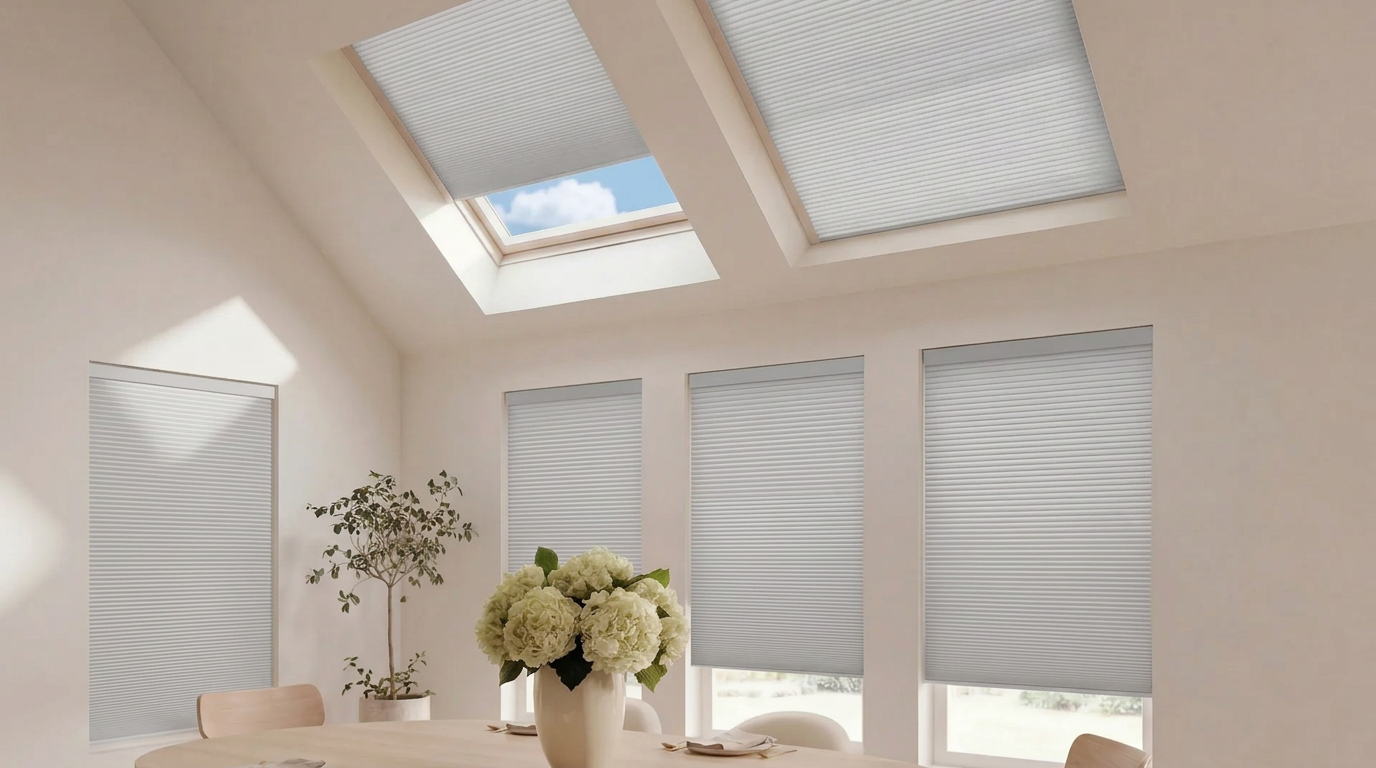
| Thermal Insulation and Year-Round Efficiency | Duette® Honeycomb Shades with LightLock® | Trapped cellular air pockets reducing seasonal heat transfer |
| Expansive Windows and Custom Casing Shapes | Engineered LightLock® Track Systems | Continuous perimeter seal matched to exact frame depths |
Advance Blinds manages every stage of on-site laser measurement and precision fitting throughout Manitoba. Our custom mounting processes ensure each side channel seats flush against uneven trim, preventing edge light leakage across all window sizes.
FAQ
To help you understand how LightLock shades block light and compare to blackout shades, we have addressed the most common questions about their performance, installation, and daily operation in the table below.
| Question | Answer |
|---|---|
| Which rooms benefit most from LightLock® channels instead of standard blackout roller shades? | Bedrooms, home theaters, and nurseries benefit most because they require true darkness at any hour of the day. Standard blackout shades leave perimeter light halos along the casing, which disrupt daytime sleepers and wash out projector screens. If your room faces direct prairie sun in Plum Coulee, Manitoba, adding side channels stops that peripheral glare completely. |
| Can older window frames with out-of-square casing accommodate LightLock® side channels? | Out-of-square window jambs make side channel alignment tricky because the tracks need parallel alignment so the fabric glides without binding. Minor variations can be shimmed during professional installation in Plum Coulee, Manitoba to preserve a tight seal against light leaks. If a window casing is severely distorted or lacks frame depth, an outside mount or standard blackout treatment paired with drapery side panels works better. |
| How does operating a shade with side channels feel compared to a standard cordless lift? | Shades fitted with LightLock® channels encounter slightly more contact resistance because the fabric edges travel inside lined, U-shaped tracks. The bottom rail still moves smoothly, but it requires a steady hand motion or automated motorization to keep the bar level. Motorized options eliminate manual tugging and ensure the fabric seats tightly into the bottom sill channel every time. |
| Do side channels provide better winter draft protection than regular blackout shades? | Yes, because the channels seal the outer boundaries of the window opening, stopping cold air convection currents from spilling into the living space. Standard shades leave gaps on both sides where dropping chilled air flows past the glass into the room. During frigid winters in Plum Coulee, Manitoba, this enclosed track design creates a dead-air pocket that cuts drafts and noticeably reduces window heat loss. |