Answer
Achieving total day-to-night ambiance requires engineered window coverings that eliminate side light gaps while insulating your living spaces. Using an innovative side-channel system like LightLock™, homeowners can trap incoming glare for superior privacy, restful sleep, and reliable UV protection. Advance Blinds provides professional measurement and tailored installation across Manitoba to ensure your room-darkening shades fit flawlessly for complete illumination control.
Overview
Achieving total darkness requires specialized side-channel hardware, opaque textiles, and precise frame measurements rather than standard off-the-shelf treatments. Homeowners managing streetlamps, shift-work sleeping patterns, or south-facing morning glare require reliable light management across every season. This blackout shades guide for room darkening and light control outlines the hardware mechanics, fabric choices, and installation steps required to prevent edge leakage.
The sections below detail how specialized window coverings compare to standard roller treatments and how regional climate factors influence product selection. Later in this guide, a labeled real-world hypothetical illustrates specific sizing challenges and mounting decisions for an active household.
- Hardware Engineering: Review how built-in side channels stop edge glow with pMaster True Light engineering.
- Product Comparisons: Evaluate differences between traditional treatments and alternative light-blocking shades.
- Regional Performance: Assess thermal insulation and glare reduction in a Manitoba home environment.
- Fabric Selection: Choose the proper cassette profiles and room darkening fabrics.
- Installation Steps: Examine the on-site mounting process using a structured shade installation procedure.
- Professional Setup: Plan custom measuring and fitting with Advance Blinds specialists.
Engineering Total Darkness with pMaster True Light Technology
LightLock™ side-channel tracks secure the perimeter of each window casing, stopping intense morning sun from bleeding around the edges of opaque textiles. Traditional dark fabrics frequently fail because standard brackets leave small side gaps where direct rays pass freely into sleeping quarters. By integrating a patented micro-ridge design within U-shaped tracks, these systems trap and absorb scattered rays before they reflect into living spaces.
Achieving total solar blockage shields family privacy, removes screen reflections in media rooms, and creates the steady pitch-black ambiance necessary for deep rest. Homeowners who examine how LightLock shades stop perimeter leakage quickly discover that specialized edge hardware makes all the difference for east-facing glass. Advance Blinds installs pMaster True Light window treatments to ensure full coverage across every pane without light halos.
Critical Performance Advantages for Darkened Living Spaces
- Edge-to-Edge Solar Seals: Continuous framing blocks perimeter sun flares that wake light-sensitive sleepers, infants, and daytime shift staff.
- Absolute Media Clarity: Full beam suppression wipes out washed-out screen displays during afternoon movie screenings or gaming sessions.
- Complete Visual Seclusion: High-density opaque materials prevent night silhouettes from showing through lit interior spaces.
Consulting our guide to room darkening for sleep outlines how zero-leak barriers regulate natural circadian rhythms. Advance Blinds secures custom edge seals directly into the jamb, creating reliable blackout conditions throughout all seasons.
Performance Comparison of Darkening Systems and Conventional Window Coverings
LightLock® channel technology eliminates the perimeter halo effect that undermines conventional room-darkening setups. Standard treatments like roller screens, horizontal slats, and thick curtains lower incoming glare, yet daylight reliably bypasses their edges. Achieving true nighttime conditions at midday requires hardware engineered to trap stray illumination along the headrail, bottom bar, and vertical window jambs.
Why Standard Window Coverings Bleed Light
Conventional installations leave small clearance spaces between the textile panel and the interior wood casing. Slat styles pierce materials with rout holes for lift cords, while wall-hung drapes allow sun rays to bounce over top rods and cast a visible arch across the ceiling. Advance Blinds installers frequently measure brightness levels in residential rooms where blackout fabrics fail to produce complete darkness simply because light escapes around the perimeter. Adding side containment channels stops this leakage by encasing the fabric edges inside an opaque barrier.
Feature Comparison for Light Management
Selecting the right treatment depends on your target darkening level, privacy needs, and acoustic preferences across different living spaces.
| Feature | pMaster True Light Blackout Shades | Standard Blackout Blinds | Blackout Drapes |
|---|---|---|---|
| Light Control | Near-total darkness with perimeter light trapping | Substantial light reduction; edge gaps remain visible | Diffused light blockage; leaks at top rod and side margins |
| Best Rooms | Nurseries, shift-worker bedrooms, private home theaters | Guest bedrooms, home offices, basement dens | Formal dining rooms, living areas, primary suites |
| Mounting Style | Precision casing mount equipped with perimeter channels | Inside or outside bracket mount with side tolerances | Wall-mounted traverse rods positioned past the frame |
| Visual Footprint | Flush, architectural profile integrated into the casing | Segmented horizontal or vertical slat profiles | Cascading fabric pleats that occupy adjacent wall space |
| Day and Night Privacy | Complete visual barrier across the pane | Strong directional privacy when closed tightly | Total evening privacy when panels are drawn shut |
| Edge Seepage | Engineered seals trap light on all four sides | Permits light halos along side gaps and slat routs | Permits overhead light bleed and vertical side spill |
| Control Systems | Motorized scheduling, wand drive, or PowerView® Automation | Cordless lift handles or manual wand tilt | Manual baton draw or motorized traverse track cords |
| Sound Dampening | Cellular pockets reduce external street noise | Negligible acoustic barrier | Dense pleating absorbs interior echo and street noise |
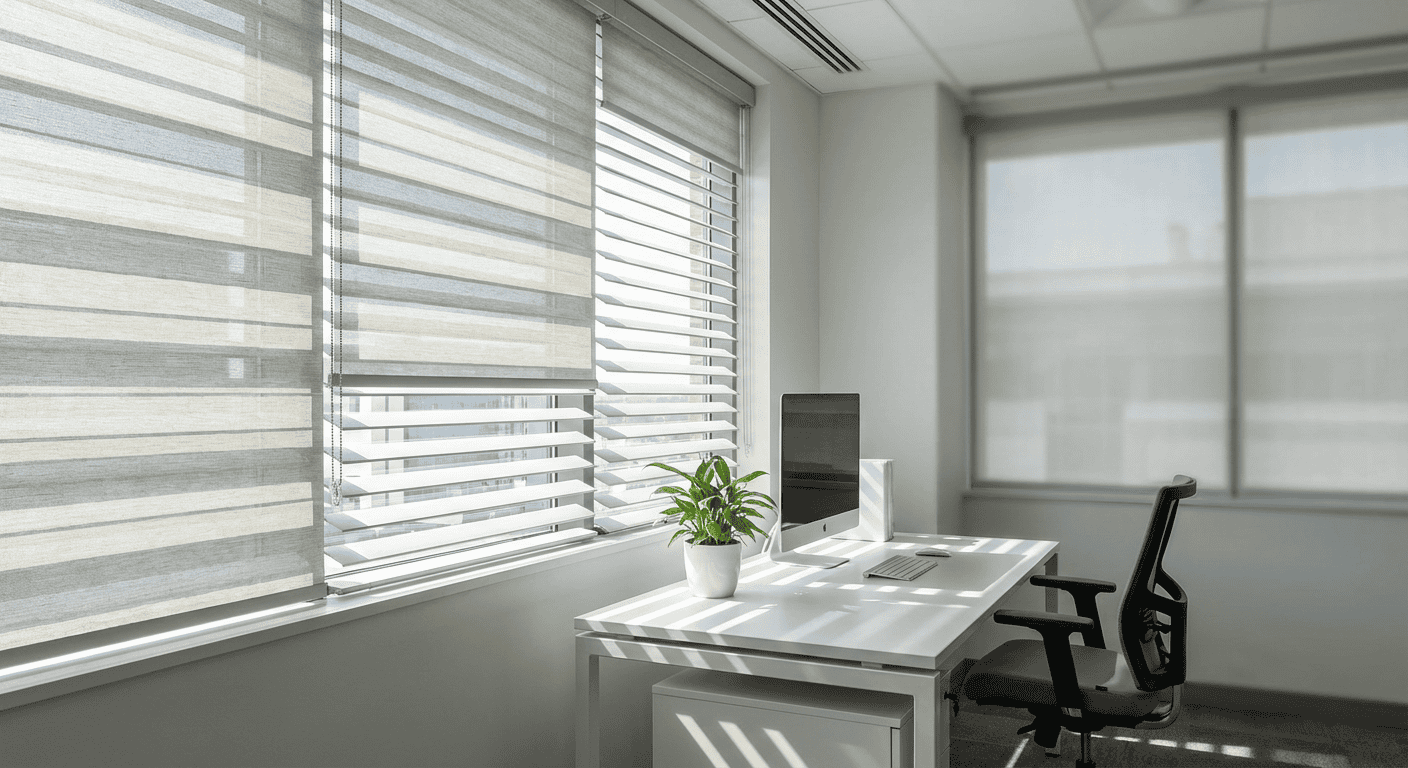
Homes requiring flexible daytime illumination alongside total night blackout often pair channel systems with multi-stage shades. Installing Duolite® dual-function shades gives you filtered sunshine through an upper sheer fabric while preserving the option to pull down an opaque room-darkening back layer whenever you rest.
Solving Bedroom Light Leaks with pMaster True Light Shades
Unfiltered exterior light entering around window perimeters disrupts nighttime sleep cycles, washes out media screens, and raises daytime room temperatures. While conventional drapes and horizontal blinds leave visible edge halos, engineered blackout systems stop light bypass entirely.
Winnipeg Home Case Study: Stopping Streetlight Infiltration
Homeowners across Winnipeg, Manitoba regularly battle premature dawn sunshine and powerful municipal streetlamps. Eleanor, a local resident, struggled with fractured sleep patterns caused by intense illumination filtering past her existing drapery panels. Seeking an effective remedy, she evaluated whether pMaster True Light shades could deliver genuine, edge-to-edge room darkening for her sleeping quarters.
The Advance Blinds Recommendation
We recommend pMaster True Light blackout shades for regional properties requiring complete darkness. For homeowners comparing flexible dual-opacity alternatives, Hunter Douglas Duolite® shades offer another avenue for variable daytime diffusion alongside nighttime privacy. However, when the goal centers on uninterrupted rest, the pMaster system excels through dedicated perimeter channels that physically seal side clearances.
- Eliminates Edge Halos: Integrated side tracks contain fabric margins to prevent perimeter glow.
- Protects Critical Spaces: Shields nurseries, primary bedrooms, and dedicated home cinemas from intrusive glare.
- Supports Restful Sleep: Blocks ambient urban streetlights and intense sunrise beams.
For enhanced daily convenience, pairing blackout treatments with ALTA Window Fashions motorized shades allows automated morning scheduling directly through handheld remotes or wall switches.
Fabric Styles and Control Options for Room Darkening Shades
Window size, interior design goals, and daily adjustments dictate the ideal shade configuration for any living space. Advance Blinds assists homeowners across Winnipeg, Manitoba in pairing room-darkening fabrics with precise mounting hardware to seal perimeter gaps and ensure complete obscurity.
Operating Mechanisms for Streamlined Control
Selecting the proper lift hardware determines how effortlessly shades operate across different window depths and room layouts:
- SoftTouch® Motorization provides intuitive wand-controlled movement that eliminates dangling cords, creating a safer environment for households with young children and pets.
- PowerView® Automation integrates motorized shades into smart home systems, enabling scheduled shade movement synchronized with sunrise and sunset.
Popular Blackout Shade Profiles
Different shade builds balance darkness, energy performance, and interior aesthetics across bedrooms and home theaters:
| Shade Style | Primary Features | Best Application |
|---|---|---|
| Roller Shades | Minimalist profile that rolls up into a slim cassette; side channels stop light leaks around edges. | Modern bedrooms and media rooms requiring dark, clean lines. |
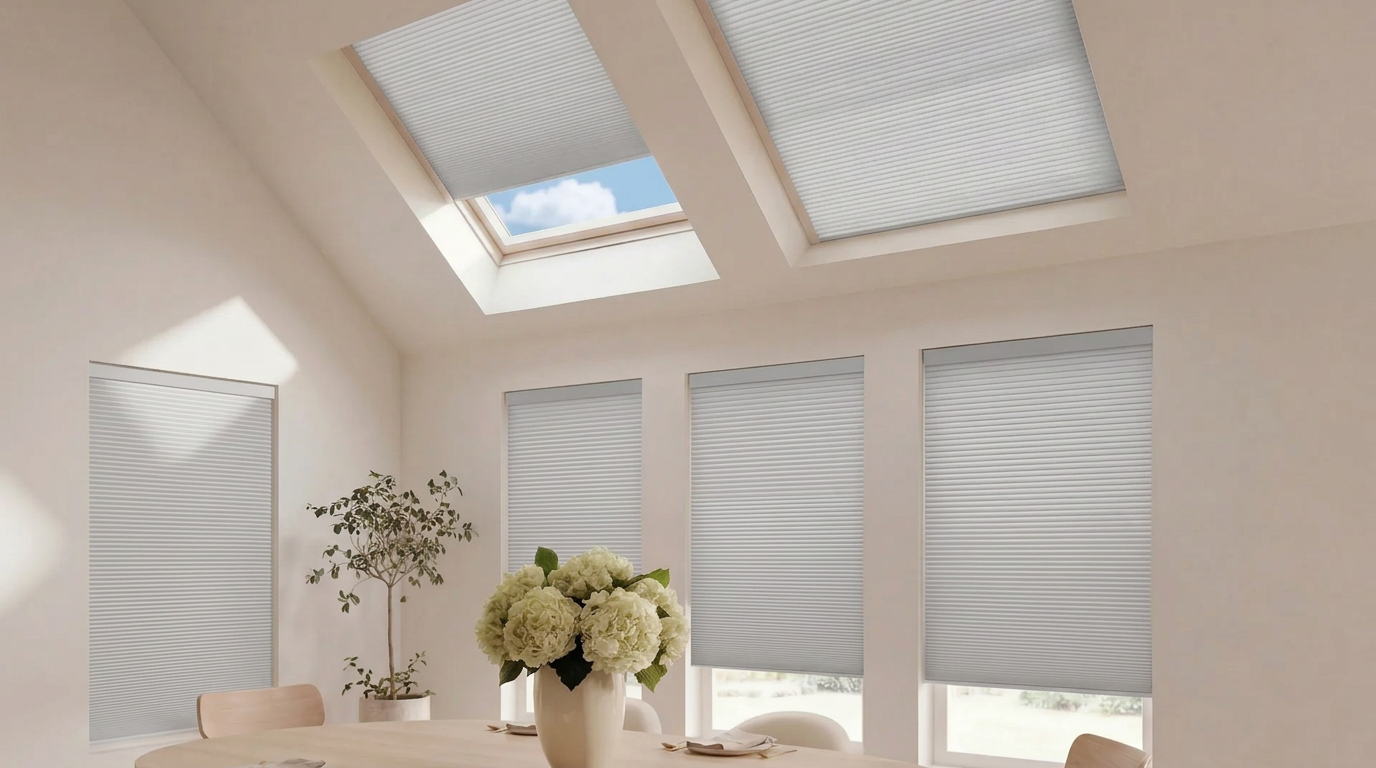
| Honeycomb Shades | Cellular chambers trap air to prevent heat transfer while dense blackout textiles block daylight. | Drafty windows and climates with extreme seasonal temperature shifts. |
| Roman Shades | Rich fabric folds combine drapery elegance with heavy room-darkening linings. | Formal living areas and primary suites prioritizing tactile textures. |
Mounting Techniques That Ensure Total Light Blockage
Precise mounting directly controls how effectively pMaster True Light shades block incoming rays and regulate indoor temperatures. Advance Blinds provides full services to guarantee every treatment fits flush against the window casing. Homeowners rely on these blackout configurations in nursery rooms, primary bedrooms, and media spaces where stray sun halos disrupt daytime sleep or wash out television screens.
Achieving total room darkening requires systematic execution at each stage of installation:
- Precision Frame Measurement: Through dedicated custom measures, our installers record exact width, height, and recess depth across three points before drilling. Millimeter precision eliminates edge halos and establishes an airtight perimeter seal.
- Customized Structural Fitting: Installers evaluate deep window sills, sloped casings, and unique woodwork to select the optimal placement angle.
- Bracket Anchoring: Technicians position heavy-duty brackets either within the jamb recess or on the outer drywall based on chosen specifications. Anchors must stay perfectly square and level so the fabric tracks true without sagging or light leaks.
Comparing different window treatment light control styles shows that even the thickest opaque fabric fails if edge gaps remain open. Proper bracket alignment and tight perimeter seals ensure pMaster True Light shades deliver uninterrupted darkness throughout the day.
Mastering Total Darkness with Precision LightLock Systems
Standard window coverings routinely leak daylight around their borders, making specialized engineering necessary for complete room darkening. Investing in high-performance blackout shades allows homeowners to isolate media spaces, improve daytime sleep schedules, and establish absolute indoor privacy.
When bedrooms or cinema spaces demand true darkness, hardware systems designed to seal the perimeter provide the solution. Hunter Douglas LightLock™ systems utilize innovative U-shaped side channels embedded with micro-ridges that capture, deflect, and absorb incoming light rays before they break into your living space. This grooved profile stops the bright halo effect that commonly outlines ordinary window blinds, even when harsh afternoon sun strikes directly against the glass.
Upgrading your window treatments with automated PowerView® Automation motorized controls adds schedule-based operation, letting shades lower automatically as bedtime arrives. Advance Blinds evaluates the distinct lighting challenges of every space to match window hardware with your darkness goals, securing brackets flush against the casing based on millimetre-precise window dimensions.
| Room Type | Recommended Window Treatment | Darkness Advantage |
|---|---|---|
| Primary Bedrooms | Roller shades equipped with LightLock™ channels | Traps peripheral illumination for continuous, deep sleep |
| Home Theatres | Cellular shades fitted with side channel hardware | Stops screen reflections during bright midday hours |
| Infant Nurseries | Roman shades with dense room-darkening liners | Soft, decorative textile folds paired with reliable daytime dimming |
| Shift Worker Rest Areas | Vertical blinds featuring opaque room-darkening slats | Shields interiors against intense daytime sunlight for shift sleep |
FAQ
To help you navigate the technical and installation details of your window treatments, this blackout shades guide for room darkening and light control addresses common questions about mounting, materials, and hardware options. The table below outlines key considerations for achieving optimal coverage, insulation, and performance in any space.
| Question | Answer |
|---|---|
| Which window frame depth is required for an inside mount with side channels? | Most inside-mount systems with side channels require at least 2 to 3 inches of flat window frame depth. If your window casing has narrow jambs or decorative trim, an outside mount extended beyond the molding provides better light coverage. Homeowners in Plum Coulee, Manitoba often choose outside mounts on older wooden casings to prevent edge light gaps entirely. |
| How do blackout Roman shades compare to cellular styles for cold drafts? | Honeycomb cellular shades trap cold air inside dedicated hexagonal cells, delivering superior insulation against drafty glass. Blackout Roman shades add dense fabric texture and aesthetic warmth, but their flat backing allows more air transfer along the sides. If reducing heat loss during sub-zero winter nights is your main goal, cellular blackout fabrics perform better than soft fold fabrics. |
| Should side channels be installed on street-facing windows to stop nighttime light halo? | Yes, side channels mount along the inside edge of the window frame to block halo glow from street lamps, headlights, and porch fixtures. Without these channels, standard roller and honeycomb fabrics leave an eighth to a quarter of an inch gap on each side. Adding light-blocking tracks creates an opaque barrier that seals the perimeter for complete room darkening. |
| Can motorized blackout systems be hardwired during a bedroom renovation? | Hardwired low-voltage wiring can be run directly behind the drywall into the upper window jamb before paint and trim are finished. If walls are already closed up, rechargeable lithium-ion battery wands mount discreetly behind the top valance and run for several months on a single charge. In Plum Coulee, Manitoba homes, battery-powered motors allow easy installation on finished window frames without cutting into plaster. |