
Answer
Insulating window coverings cut heat transfer through glass by up to 40%, keeping indoor spaces comfortable across all seasons. Energy efficient blinds trap air in cellular pockets or use dense materials to block summer solar heat gain and prevent winter warmth from escaping. Advance Blinds in Winnipeg, Manitoba, matches window treatments to your room’s sun exposure and local climate to directly lower monthly heating and cooling expenses.
Overview
Insulating window coverings cut household heat gain and loss by up to 40%, directly lowering year-round heating and cooling expenses. Energy efficient blinds trap air against the glass to block thermal transfer and stabilize indoor room temperatures. Below, you will find technical criteria for choosing the best window treatments for each room, alongside a practical scenario featuring a homeowner named Eleanor as she upgrades her windows for better climate control.
- Utility Bills: Check the data on how blinds affect energy usage across winter and summer seasons.
- Blind Types: Compare various blind options built to reduce thermal transfer and drafts.
- Real-World Example: Follow a homeowner’s decision process when matching window coverings to specific room orientations.
- Performance Metrics: Evaluate specific performance indicators like R-values and solar heat gain coefficients.
- Installation: Review the steps for installing energy efficient blinds with tight seals and minimal side gaps.
- Advance Blinds: Browse the range of solutions custom-fitted and installed by Advance Blinds.
How Energy Efficient Blinds Reduce Utility Bills
Insulating energy efficient blinds cut residential heat gain and loss by up to 40% by trapping air in a thermal barrier against the glass. This pocket of air retains indoor warmth during winter and reflects incoming solar radiation during summer, which lowers the daily demand on furnaces and air conditioners. Advance Blinds notes the strongest thermal improvements in south- and west-facing rooms where intense sunlight causes rapid temperature swings.
Blocking drafts and direct UV rays stops the two primary drivers of household HVAC waste. Stabilizing room temperatures lets homeowners adjust their thermostats by several degrees without sacrificing comfort, directly lowering monthly utility bills. Advance Blinds installs specialized window coverings that help manage seasonal temperatures and cut year-round electricity and gas consumption.
Blind Types for Maximum Energy Savings
Insulating window coverings reduce home heat loss and solar gain by up to 40%, directly cutting seasonal utility bills. Each style delivers a specific level of thermal resistance that controls how fast warm or cool air moves through glass panes. Advance Blinds in Winnipeg matches specific window treatment structures to room orientation and local climate demands for maximum indoor temperature control.
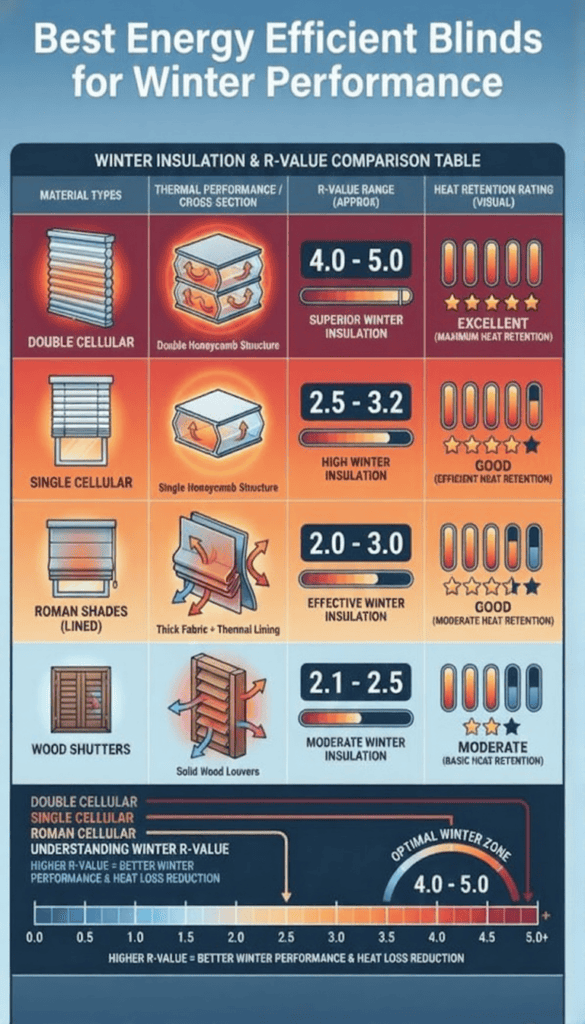
Homeowners can select from several thermal designs to stabilize indoor temperatures. Certain models trap dead air at the glass surface, while slatted styles deflect harsh sunlight to stop afternoon overheating. Both Energy Efficient shades and cellular models create a strong thermal barrier that lowers monthly heating and cooling expenses.
| Blind Type | Energy-Saving Mechanism | Best Use Cases |
|---|---|---|
| Cellular Shades | Honeycomb pockets capture air inside structured cells to block heat transfer. | Drafty windows requiring year-round insulation in extreme winter and summer climates. Top Cellular shades benefits include high R-values and measurable heat retention. |
| Roller Shades | Solar-reflective fabrics reject incoming UV rays and pair with blackout liners for extra thermal protection. | South-facing or west-facing glass where stopping intense afternoon heat gain is the primary target. |
| Roman Shades | Heavy woven fabrics and custom thermal backings slow down conductive heat loss through window panes. | Main living spaces and bedrooms that require both decorative fabric folds and cold-weather insulation. |
| Vertical Blinds | Rotating vertical vanes give precise control over incoming daylight and solar warmth across wide glass spans. | Sliding patio doors and floor-to-ceiling windows where occupants need to angle sunlight away from floors and furniture. |
Picking the right energy efficient blinds depends on glass direction, regional weather patterns, and room layout. Product choices range from multi-cell honeycomb shades to adjustable vertical vanes for wide doorways. Advance Blinds pairs Winnipeg homeowners with exact window covering specifications to hit household energy targets and interior design preferences.
Select Energy Efficient Blinds for Home
Insulating window coverings reduce residential heat transfer by up to 40%, directly lowering monthly heating and cooling expenses. Homeowners in extreme climates need window treatments that regulate indoor temperatures and limit utility consumption across all four seasons.
Eleanor wants to install energy-efficient blinds in her Winnipeg house to handle severe seasonal weather shifts. She is weighing whether to buy window coverings that retain indoor warmth during sub-zero winters or styles that block intense solar heat during summer. Should Eleanor prioritize winter thermal insulation or summer solar heat rejection for her Winnipeg property?
Recommendation: Cellular Shades
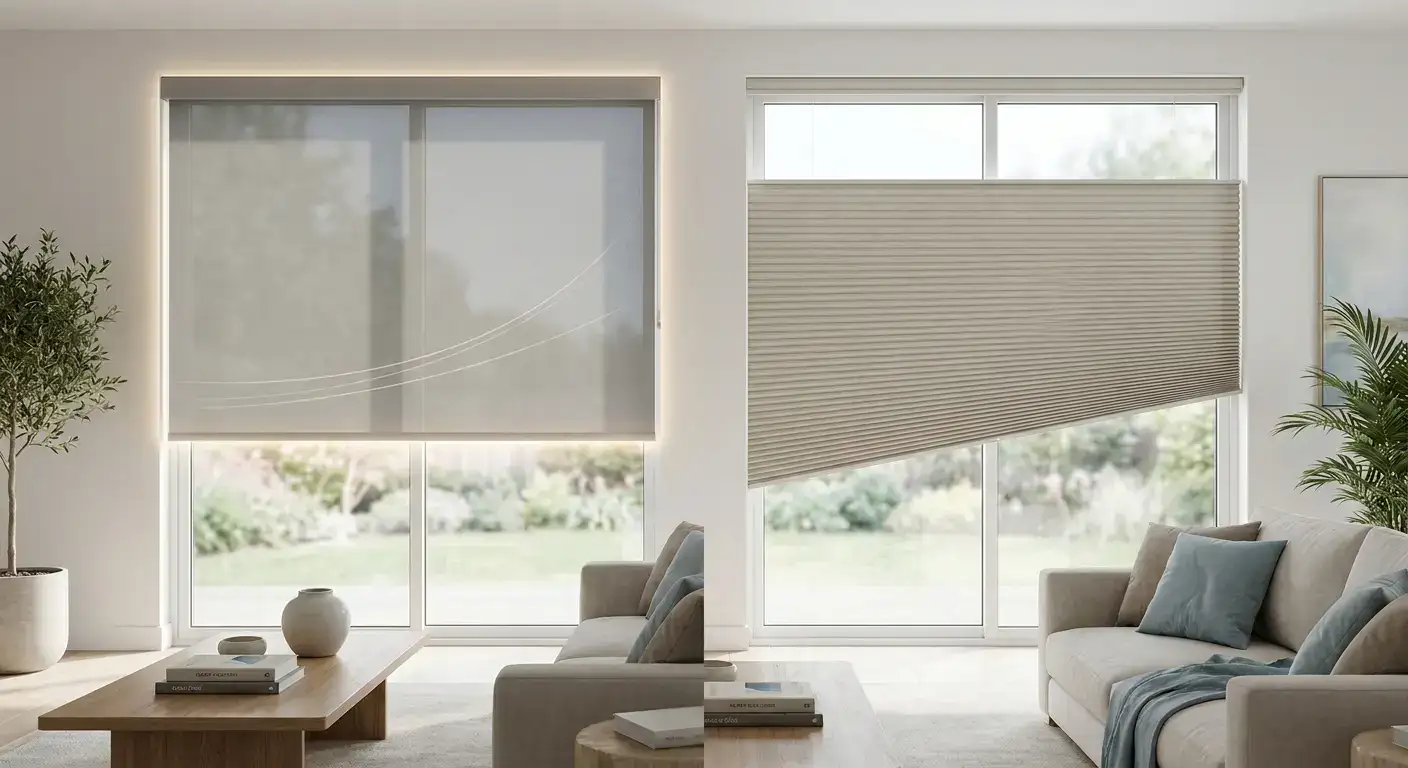
Advance Blinds recommends cellular shades for year-round climate control. Their honeycomb pockets trap air at the window glass, forming an insulating barrier that slows winter heat loss and blocks summer solar heat gain. This dual-action structure stabilizes room temperatures through extreme weather shifts. Pairing cellular shades with SoftTouch motorization or PowerView Automation allows homeowners to schedule daily shade adjustments based on outdoor sunlight and temperature.
Energy Efficient Blinds: Real-World Examples
Insulating window coverings reduce home heat gain and loss by up to 40%, directly lowering monthly heating and cooling expenses. Residential installations show how specific window treatments stop drafts and solar overheating across different room exposures. These real-world applications highlight the measurable temperature control homeowners achieve after upgrading their windows.
Advance Blinds matches window coverings to a building’s compass orientation and glass type. West-facing windows require dense thermal barriers to block intense afternoon sun, while north-facing glass needs trapped air layers to stop winter heat escape. Matching the shade structure to the sun’s path stabilizes indoor temperatures year-round.
- Insulating Cellular Shades for North-Facing Windows: A homeowner in Winnipeg, Manitoba, experienced severe winter heat loss through north-facing glass. Installing double-cell honeycomb shades created a sealed air pocket across the window frame, stopping cold drafts and slowing conductive heat transfer. The upgrade stabilized room temperatures and reduced daily furnace runtime.
- Solar Shades for South-Facing Living Areas: Another resident dealt with harsh glare and afternoon overheating in a large south-facing living room. Installing high-reflectivity solar shades blocked incoming thermal radiation while preserving outward visibility, keeping the space cooler and preventing UV fading on furniture. The fabric openness factor also improved daily window Treatment Light management.
- Automated Roller Blinds for Seasonal Adjustments: A client fitted motorized roller blinds onto east-facing windows and scheduled them to move with the sun. The smart controller lowers the shades during peak summer mornings to block heat and raises them on sunny winter mornings to capture free passive solar warmth. This automated schedule maximizes the thermal performance of their energy efficient blinds and keeps indoor temperatures steady without manual adjustments.
Install Energy Efficient Blinds for Peak Performance
Exact mounting directly determines how well window coverings insulate a room and prevent heat loss. Minor perimeter gaps or crooked brackets drastically reduce the insulating value of high-grade shades. Advance Blinds takes exact measurements and handles professional mounting to eliminate perimeter air leaks and boost overall thermal performance.
Winnipeg homeowners frequently run into trouble when hanging window coverings without accounting for warped frames or protruding sills that block a flush fit. An out-of-square window casing allows drafts to bypass even the best energy efficient blinds. Custom fabrication and specialized brackets solve this problem by closing off irregular gaps.
| Installation Factor | Impact on Energy Performance |
|---|---|
| Precise Measurement | Minimizes side clearances to stop convective heat transfer around the edges. |
| Mounting Type | Inside mounts sit flush within the casing to trap dead air against the glass. |
| Fabric Overlap | Wider wall coverage on outside mounts blocks drafts around the entire frame. |
| Operating System | Automated systems, including SoftTouch motorization, schedule daily opening and closing to manage solar heat and indoor temperatures. |
| Window Condition | Drafty, aging window frames need fresh caulking or weatherstripping prior to hanging shades for maximum savings. |
Hiring professionals to fit energy efficient blinds costs more upfront than do-it-yourself mounting, but the tighter seal delivers stronger utility bill reductions year after year. In regions with severe winter freezes and hot summers, custom fitting recoups its cost by stopping conditioned air from escaping through the glass.
Advance Blinds: Top Energy Saving Treatments
Insulating window coverings reduce indoor heat transfer by up to 40%, directly lowering residential heating and cooling bills. Advance Blinds supplies thermal treatments that increase window R-values and block solar heat gain. Homeowners achieve the highest energy savings by matching shade materials to specific window orientations and room requirements.
Thermal shades form a physical barrier against the glass, retaining heated indoor air during winter and deflecting outdoor heat during summer. Adding motorized controls, such as SoftTouch motorization or PowerView Automation, increases these savings. Automated schedules adjust the shades during peak sunlight hours, even when the house is empty.
Advance Blinds supplies five primary options for homeowners seeking energy efficient blinds:
| Product | Best for | Budget | Reason |
|---|---|---|---|
| Cellular Shades | Year-round thermal control, acoustic dampening | Mid-range | Honeycomb pockets trap air at the window pane to form an insulating barrier that also absorbs outside noise. |
| Duette Honeycomb Shades | Maximum thermal resistance, UV blocking | Mid-to-High | Multi-cell construction raises the window’s R-value and stops up to 80% of unwanted solar heat gain. |
| Roman Shades | Classic fabric styling, moderate thermal control | Mid-range | Pairing the heavy pleated fabric with a thermal backing adds a dense layer that slows draft transfer. |
| Roller Shades (with solar fabrics) | Glare control, UV filtration | Low-to-Mid | Reflective solar weaves bounce radiation away from the glass, cutting indoor heat buildup while preserving natural light. |
| Woven Wood Shades | Organic textures, diffused light | Mid-range | Adding a room-darkening or thermal liner transforms these natural materials into an effective barrier for privacy and heat retention. |
Selecting the right treatment depends on directional sun exposure, current window glazing, and interior design goals. Advance Blinds provides custom window measurements and professional installation to eliminate perimeter air gaps and maximize thermal performance.
FAQ
Choosing the right window treatments can make a noticeable difference in your home’s year-round comfort and utility expenses. Below, we answer common questions about how energy efficient blinds work to insulate your windows and reduce heating and cooling costs.
| Question | Answer |
|---|---|
| What styles of energy efficient blinds best lower winter heating bills? | Cellular honeycomb shades with double or triple-cell construction deliver the highest R-values among energy efficient blinds, cutting winter heat loss through windows by up to 40%. The honeycomb air pockets trap air at the glass to form a thermal barrier that slows heat conduction. Insulated Roman shades and thermal roller shades with reflective backing also retain indoor warmth, keeping room temperatures steady and lowering monthly heating bills. |
| What styles of energy efficient blinds provide the highest thermal insulation for windows? | Double and triple-cell honeycomb cellular shades deliver the highest R-values among energy efficient blinds, using air pockets to cut window heat transfer by up to 40%. Insulated Roman shades, plantation shutters, and thermal roller shades with reflective backing also provide strong heat retention and block solar heat gain. These window coverings keep indoor temperatures stable year-round and lower monthly heating and cooling bills. |
| How do energy efficient blinds insulate windows to lower heating and cooling bills? | Energy efficient blinds insulate windows by trapping air inside specialized fabric layers or honeycomb pockets, increasing the window’s R-value and slowing heat conduction through the glass. This thermal barrier blocks cold drafts in the winter and reflects solar heat gain during the summer, reducing window heat transfer by up to 40%. By keeping indoor temperatures stable year-round, these coverings reduce the workload on your HVAC system and lower your monthly heating and cooling bills. |
| What are the main advantages of installing energy efficient blinds to lower heating and cooling bills? | Energy efficient blinds can reduce window heat loss and solar heat gain by up to 40%, directly lowering monthly heating and cooling bills. Insulated options like honeycomb cellular shades increase window R-values by trapping air in their pockets, which keeps indoor temperatures stable and reduces the workload on your HVAC system. Beyond year-round utility savings, these window coverings block harmful UV rays to protect flooring and furniture while cutting overall household energy consumption. |