
Answer
Understanding how sheer shades manage light control and home privacy comes down to their innovative design, which suspends soft fabric vanes between two sheer layers to diffuse harsh rays while obscuring outside views. Upgrading to Duolite® shades takes this versatility even further by pairing a light-filtering front sheer with an independently operated room-darkening back roller. Homeowners working with Advance Blinds can effortlessly tilt the vanes during bright afternoons to capture natural illumination or close them entirely for total evening seclusion.
Overview
Window coverings balance direct sun exposure with everyday indoor seclusion through adjustable fabric layers. Selecting the appropriate vane build and weave structure determines how sheer shades manage light control and home privacy across living spaces throughout the day.
The following sections outline mechanical functions, material densities, and design comparisons, alongside a labeled real-world hypothetical that illustrates specific room choices before scheduling professional measurements.
- Vane Mechanics: Rotating fabric slats offer precise daylight diffusion without eliminating your outdoor view.
- Opacity Grades: Fabric weaves range between light-filtering textures and room-darkening inserts when selecting fabric opacity.
- Product Comparisons: Traditional roller systems and slatted blinds perform differently when comparing alternative window treatments.
- Daytime Seclusion: Fabric angles and backlighting conditions influence practical indoor privacy levels during day and night hours.
- Real-World Example: A practical scenario shows how regional architectural styles influence product choices.
- Expert Measurement: Professional layout reviews help homeowners plan custom installations with accurate window specifications.
Precision Illumination Through Multi-Layered Sheer Construction
Horizontal fabric vanes suspended between two translucent exterior textiles form the architectural foundation of sheer window shades. This triple-layer profile bends raw incoming solar radiation into ambient daylight, brightening interiors without creating uncomfortable thermal hotspots. By adjusting the angle of these interior vanes, homeowners regulate midday beam angles to minimize annoying computer and screen reflections while maintaining visibility to the exterior.
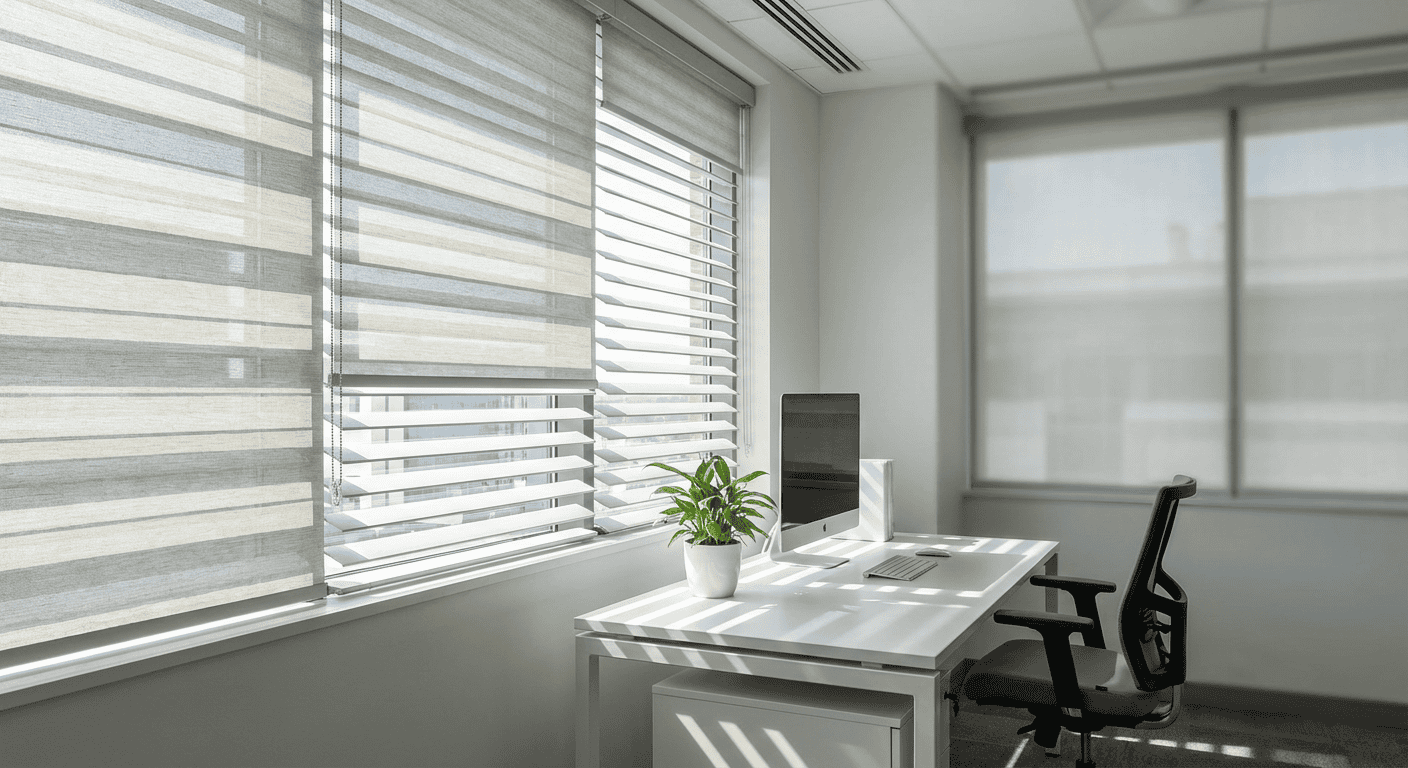
Hunter Douglas Duolite® systems integrate an independently operating opaque back roller behind the primary sheer fabric on a shared cassette. This dual-layer architecture gives homeowners the ability to alternate between luminous daylight diffusion and complete blackout conditions across distinct times of day.
| Sheer Shade Engineering Component | Functional Interior Benefit |
|---|---|
| Rotating fabric louvers | Fine-tunes interior lumen levels and angles sunlight away from sightlines. |
| UV-deflecting sheer facing | Protects hardwood floors, area rugs, and canvas art from sun bleaching. |
| Diffuse daylight scattering | Spreads filtered natural light across walls and ceilings to eradicate shadows. |
| Reflective textile weave | Stops harsh glare on monitor displays and television screens. |
Homes equipped with automated systems like PowerView® Automation can schedule louver adjustments to align with changing sun positions throughout the day. Advance Blinds installs custom sheer solutions engineered to balance steady interior brightness with prolonged furniture protection.
Selecting Fabric Opacity for Daytime Illumination and Night Seclusion
Fabric weave density directly determines how much sunlight filters through your windows and how clearly outsiders can see into your living space. Examining standard window treatment opacities allows homeowners to match specific fabric weights to the precise sun exposure of each room. Windows exposed to intense southern exposure often benefit from airy materials that scatter harsh beams without darkening the interior, whereas ground-level bedrooms require denser weaves to stop exterior sightlines after dusk.
For spaces requiring total flexibility between afternoon sun and midnight darkness, Duolite® shades dual function combines an open sheer layer with an independent opaque backing on a single headrail. Advance Blinds supplies materials across the entire density spectrum, allowing you to configure each window based on orientation and daily activities.
| Fabric Density | Daytime Illumination and Glare Control | Nighttime Seclusion Level |
|---|---|---|
| Translucent | Filters direct sun into a gentle glow while retaining outward visibility | Minimal; interior figures remain visible when indoor lamps are on |
| Light Filtering | Softens incoming brightness and reduces glare on digital displays | Moderate; exterior observers see only blurred shapes after dark |
| Room Darkening | Substantially dims incoming daylight by blocking intense rays | High; outlines appear only as faint silhouettes when backlit |
| Blackout | Stops exterior rays completely and eliminates sightlines | Maximum; prevents any inward visibility day or night |
Home offices and open-concept dining rooms often thrive with lighter opacities that prevent screen reflections while preserving exterior scenery. In contrast, street-facing primary bedrooms and media spaces perform best with room-darkening or blackout vanes that shut out passing headlights, streetlamps, and early morning sun.
Comparing Sheer Shadings to Alternative Window Coverings
Selecting window materials directly shapes both interior illumination and daytime discretion. Many standard window coverings create an all-or-nothing trade-off. Opaque roller units seal off outdoor scenery completely, while heavy drapes darken rooms by blocking natural radiance entirely. In contrast, sheer shadings suspend adjustable fabric vanes between dual gossamer layers, diffusing harsh glare while maintaining clear lines of sight to the yard.
When reviewing diverse window coverings on the market, homeowners must weigh glare dispersal against street-level seclusion. Automated options from ALTA Window Fashions® allow precise vane tilts throughout peak daylight hours, protecting hardwood floors from intense solar degradation without shutting out natural warmth.
| Window Treatment Style | Daytime View Preservation | Glare Dispersal | Daytime Seclusion |
|---|---|---|---|
| Sheer Shadings | High (vanes tilted open) | High (dual sheer facings) | Moderate to High |
| Solid Roller Shades | None (when lowered) | Low (complete block or wash) | Complete |
| Lined Drapery Panels | None (when drawn shut) | None (blocks window frame) | Complete |
Advance Blinds guides Winnipeg clients through these performance metrics during in-home consultations across Manitoba. Consider a homeowner like Eleanor, who wants to update her front-facing sitting area. She seeks bright daylight but wants to block street views during afternoon hours. Advance Blinds helps residents choose between wider vanes, which expand exterior sightlines, or denser fabric weaves that obscure indoor silhouettes from passersby.
Window Privacy Strategies Using Layered Sheers
Street-level windows and ground-floor bedrooms present distinct sightline challenges that standard blinds struggle to address. Property owners resolve these exposure issues by coordinating sheer fabric opacities with secondary coverings. In variable Winnipeg climates, balancing daytime sun exposure against night-time screening demands adaptable shading solutions.
Integrating a dual-roller configuration such as the Hunter Douglas Duolite® system gives rooms flexible, multi-stage filtration. The front translucent fabric softens intense midday glare, while an independently operated rear roller drops into place at dusk to stop indoor shadows from showing outside. Automated control through PowerView® Automation allows homeowners to schedule these transitions automatically as sun angles shift throughout the day.
Techniques to Eliminate Outside Sightlines
- Mount companion side draperies: Installing custom blackout drapery panels over your primary sheer roller creates a thermal barrier and shuts down exterior visibility on demand. Pairing these textiles with motorized tracks from our PowerView® motorized drapery collection guarantees rapid room darkening at night.
- Specify compact, dense weaves: Selecting textiles with tightly woven micro-fibers limits direct interior visibility from adjacent properties while still permitting gentle illumination to enter living spaces.
- Prevent perimeter light leakage: Professional laser measurements ensure tight casing tolerances, eliminating side light gaps where outsiders could catch views into the home. Combining this fitted approach with LightLock™ channels traps edge reflections and isolates bedroom spaces completely.
Selecting Sheer Shade Styles for Prairie Climates
Installing custom window treatments helps prairie residences handle intense seasonal weather swings, from sub-zero winters to blazing midsummer sun. Manitoba homes face long daylight hours and low-angle glare that degrade interior furnishings and push cooling systems hard. Incorporating horizontal vanes suspended between twin translucent fabric facings softens strong sunlight into balanced ambient glow while preventing ultraviolet bleaching across hardwood floors and upholstery.
Our collection of ALTA Window Fashions® provides specialized architectural profiles built to match distinct window frames and interior layouts. Frame proportions, operating mechanisms, and room orientation determine which construction yields optimal performance:
- Roller Sheer Systems: These configurations wind fabric directly into a slim overhead cassette, presenting a clean line suited for streamlined rooms or large picture windows. Reviewing roller shade use cases highlights how flat fabric faces preserve broad outdoor sightlines while dispersing harsh midday beams.
- Structured Horizontal Vane Shades: Fabric louvers tilt open or closed to direct daylight toward the ceiling, diffusing brightness deeper into living areas without creating glare on screens.
- Cascading Fold Shades: Soft dimensional pleats bring tailored textile warmth to formal dining areas and master bedrooms while maintaining steady solar heat moderation.
We measure every casing precisely because solar heat gains, fabric weave openness, and thread tone directly dictate light diffusion and exterior obscurity during sunny hours. Dense white weaves bounce solar radiation away from south-facing exposures, whereas darker charcoal meshes cut high-contrast reflections while maintaining clear views outside.
Select the Right Sheer Shades with an In-Home Consultation
Selecting custom window treatments requires balancing natural daylight, sightline obscurity, and existing interior decor. With our in-home consultations, Advance Blinds brings actual fabric sample books right to your living space so you can examine weave density, textures, and color tones directly against your wall paint and furniture under changing sun angles.
We examine architectural exposure, sun orientation, and everyday space usage to address specific household challenges. Pairing your windows with ALTA Window Fashions® provides durable materials engineered to eliminate TV screen glare in home theaters or shield ground-floor bedrooms from street views after dark. For tricky clerestory windows or cathedral spaces, our installers can integrate automated systems like Hunter Douglas PowerView® Automation, which can also run on sustainable accessories like solar chargers for motorized shades to simplify battery upkeep.
| Sheer Shade Configuration | Ideal Space Application | Investment Tier | Performance Benefit |
|---|---|---|---|
| Standard Light-Filtering Sheers | Living rooms, sitting parlors, and dining spaces | Mid-range | Diffuses harsh glare while maintaining clear views outside during daylight hours. |
| Room-Darkening Sheers | Primary suites, nurseries, and entertainment lounges | Mid to high-range | Blocks substantial light penetration to protect afternoon rest and create private spaces at night. |
| Dual-Opacity Sheers | Multi-use bonus rooms, home offices, and guest suites | High-range | Merges sheer fabric vanes with opaque backing, similar to Hunter Douglas Duolite® systems, for versatile light diffusion. |
| Motorized Sheers | Two-story entryways, skylights, and connected spaces | Premium | Delivers remote-control positioning, automated runtime schedules, and integration with home network hubs. |
Exploring window treatment light control options helps clarify how individual vane depths alter incoming rays across varied hours of the day. Our specialists take precise laser measurements on site, ensuring each custom shade fits within your window casing cleanly without uneven light gaps.
FAQ
To help you better understand how sheer shades manage light control and home privacy, we have answered some of the most common questions about visibility, sizing, and everyday performance in the guide below.
| Question | Answer |
|---|---|
| Can people see inside through sheer shades at night when indoor lights are on? | People outside can see silhouettes if the interior vanes remain open while indoor lights are on. Tilting the fabric vanes completely shut blocks direct sightlines and gives you full evening privacy. If you want maximum darkness and privacy in bedrooms, pairing sheer shades with blackout drapery panels provides a complete light barrier. |
| Which vane size works best for wide living room windows? | Three-inch and four-inch vanes work best for large picture windows because wider louvers preserve an open view to the outdoors when tilted. Smaller two-inch vanes suit standard bedroom or kitchen windows where tighter proportions look balanced. Wider vanes also require fewer total slats, which reduces horizontal lines across large glass spans. |
| How do sheer shades compare to classic wood blinds for glare control? | Wood blinds block light entirely along each solid slat, often creating sharp alternating bars of bright sun and dark shadow across a room. Sheer shades diffuse incoming sunbeams through two layers of fabric, softening the light while cutting reflections on television and computer screens. You maintain a brighter room without the harsh glare that comes through open wood slats. |
| What is the typical installation cost for custom sheer shades in Plum Coulee, Manitoba? | Custom sheer shade installations in Plum Coulee, Manitoba generally range from $250 to $650 per window, depending on dimensions, chosen fabric opacity, and whether you select manual or motorized tilt controls. Whole-home packages vary based on the number of large living areas versus standard bedroom windows. Professional measuring ensures the fabric vanes sit level within the window frame for smooth light adjustment. |