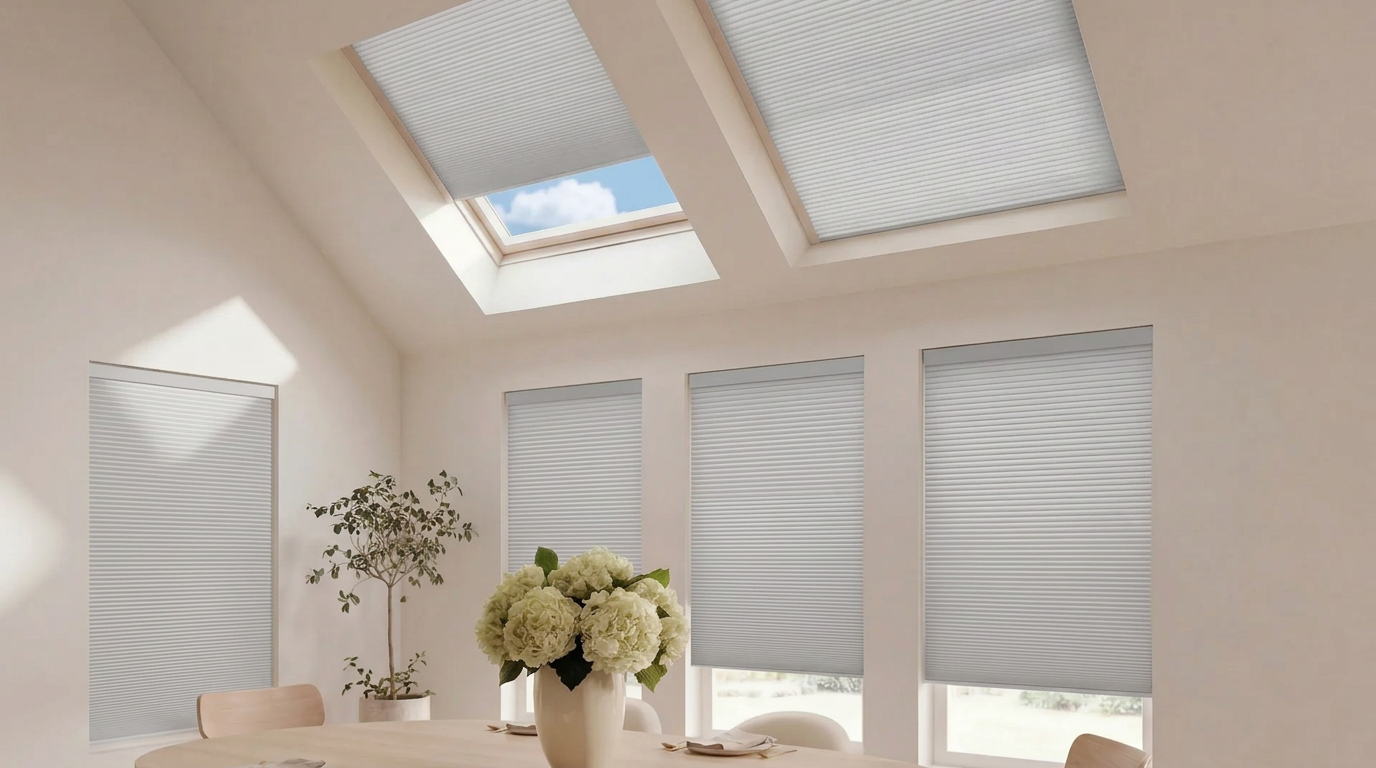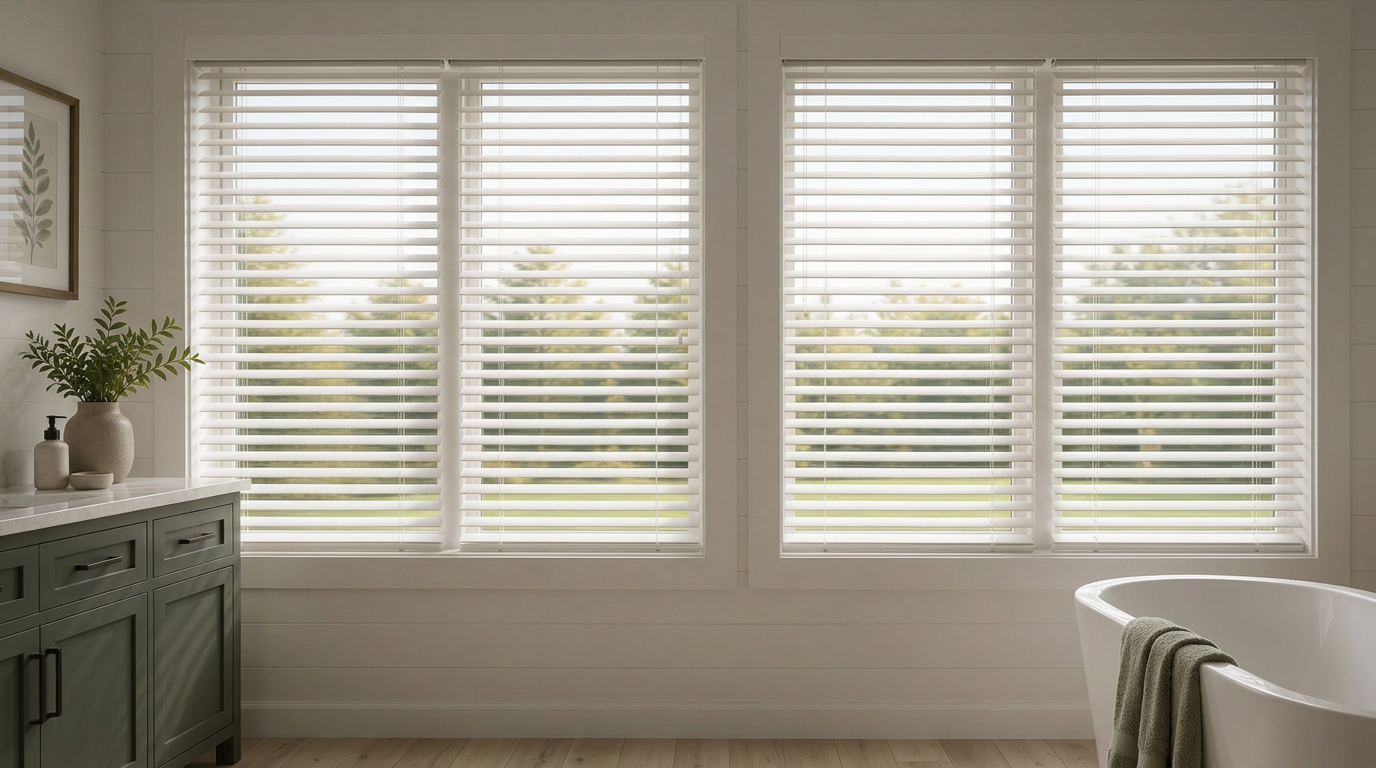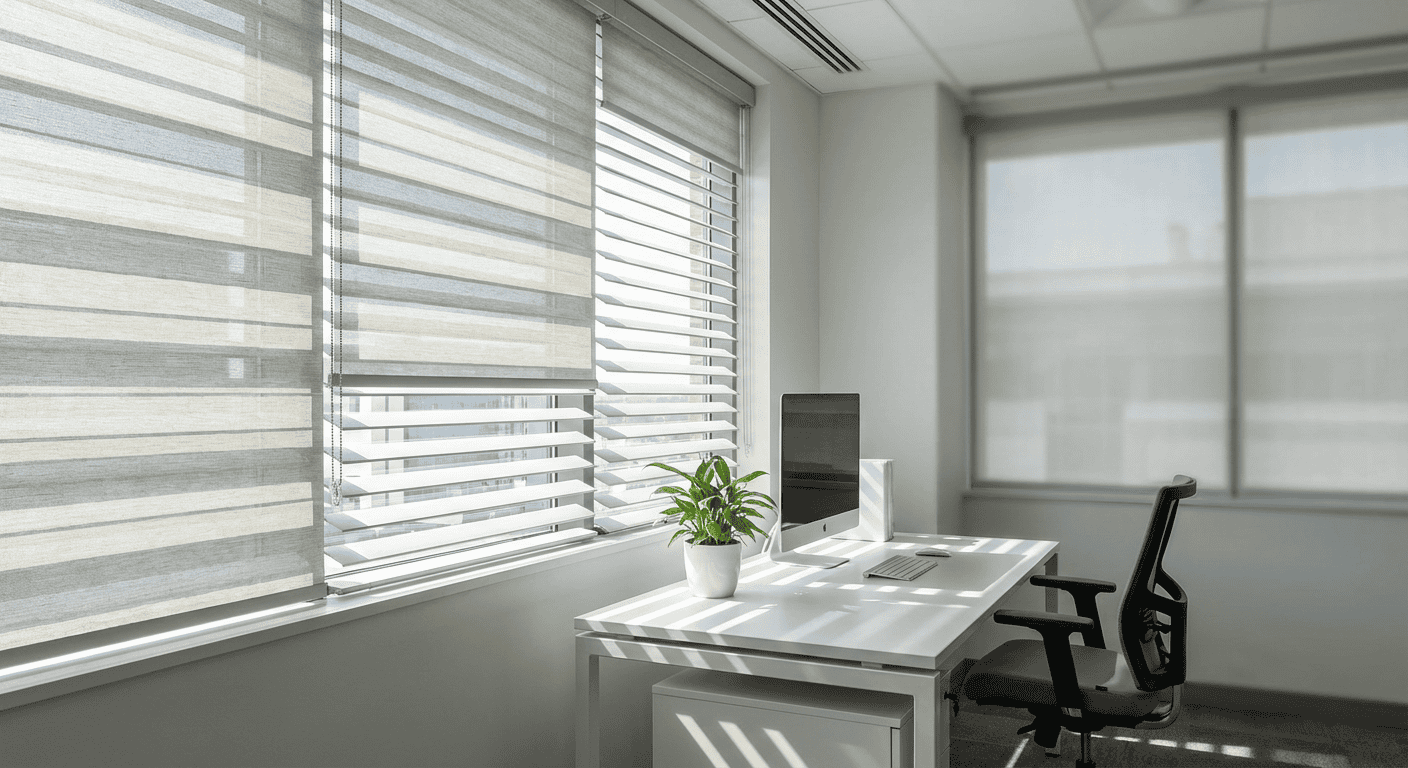

Understanding how cellular shades work for insulation and light control comes down to their engineered honeycomb cells, which create dead-air pockets that minimize window heat transfer while diffusing incoming glare. For ultimate daylight management and thermal efficiency, pairing these insulating fabrics with Duolite® shades dual function technology lets you combine sheer and opaque textiles on a single headrail. Advance Blinds offers these versatile window coverings to help homeowners maintain comfortable indoor climates and customized brightness levels all year long.
Overview
Selecting custom window coverings involves balancing energy performance, daily sunlight management, and interior style. The sections ahead outline how cellular shades work for insulation and light control across varied window orientations and living spaces. The review also incorporates a labeled real-world hypothetical featuring a Plum Coulee, Manitoba homeowner to demonstrate specific product selections under typical household constraints.
- Thermal Efficiency: Learn how cell construction creates window insulation to reduce residential draft issues.
- Opacity Options: Compare sheer, semi-opaque, and blackout fabrics designed for adjusting daylight levels in different rooms.
- Cell Formats: Review single, double, and pleated designs when matching shade styles to specific window dimensions.
- Flexible Privacy: Discover dual-direction adjustments that enhance street-level window privacy while preserving natural incoming light.
- Interior Decor: Explore color palettes and fabric profiles when coordinating complementary room aesthetics throughout the home.
- Measurement Planning: Evaluate mounting depths and layout considerations using professional shade recommendations before placing an order.
Standard window glass accounts for up to 30 percent of residential heating and cooling loss, according to Natural Resources Canada data. Honeycomb or cellular window coverings counteract this thermal transfer through an engineered structural design. The fabric features distinct horizontal pockets that trap ambient air against the pane, creating a thermal barrier that moderates interior temperatures while managing incoming daylight.
How Honeycomb Pockets Regulate Temperature
Air acts as an exceptionally poor thermal conductor when trapped inside small, enclosed pockets. Cellular shade fabrics bond woven or non-woven polyester textiles into single, double, or triple layered cells that expand as the shade drops. During cold prairie winters, this trapped air pocket prevents warm interior room air from touching freezing glass. In summer, the barrier reflects radiant solar energy away from the living space, reducing dependence on mechanical cooling systems.
Light Diffusion and Room Darkening Mechanisms
Fabric opacity dictates how much sunlight filters into the home, ranging from sheer weaves that preserve exterior views to dense multi-layered room-darkening backings. Choosing Duolite® shades for dual function gives homeowners simultaneous daytime light diffusion and nighttime privacy by combining two distinct fabric opacities on a single headrail.
For total darkness, pairing opaque cellular fabrics with side channels stops perimeter light leakage. Upgrading window openings with LightLock™ side track systems absorbs light rays that normally bleed around the edges of standard inside mounts, creating near-blackout conditions suitable for media rooms and bedrooms.
Thermal Performance and Year-Round Utility Reduction
Winnipeg weather brings extreme sub-zero winters alongside sweltering summer afternoons, putting intense strain on glass surfaces. Installing energy efficient shades can help reduce indoor heating or cooling loss. At Advance Blinds, we specify these architectural treatments for properties where lowering annual power bills and balancing interior drafts take highest priority.
Key Mechanics of Honeycomb Insulation
- Stationary Air Pockets: Honeycomb cells hold static air inside distinct fabric tubes, creating a buffer that retards conductive thermal transfer into or out of the room.
- Multi-Cell Construction: Choosing double-cell or triple-cell fabric styles amplifies overall resistance, keeping intense outdoor freezes from cooling indoor living spaces.
- Flexible Daylighting Hardware: Operating shades with top-down/bottom-up rails enables natural illumination through the top window portion while lower panes remain shielded against weather extremes.
Pairing insulating honeycomb fabric with PowerView® Automation gives homeowners the power to schedule automated shade closure before the harshest afternoon solar gain strikes west-facing glass. Blocking direct sun and trapping indoor warmth at the pane can provide comfort gains.
Managing Sunlight and Opacity with Honeycomb Fabrics
Fabric density affects how cellular shades work for insulation and light control. Cellular textiles attenuate between 10% and 100% of exterior brightness, preventing harsh ultraviolet degradation on hardwood flooring and upholstery while establishing target ambient illumination. In Winnipeg, Manitoba, changing seasons bring intense summer glare and long winter afternoons, prompting property owners to assign specific fabric weaves to individual rooms based on privacy and illumination demands.
Advance Blinds equips homes across the province with precision fabrics and hardware configurations designed for varying sunlight intensities. While communal spaces flourish under soft natural illumination, resting zones demand intense dimming. Incorporating the proprietary LightLock™ system seals the perimeter of the jamb, using micro-ridges to intercept perimeter light leaks that standard window coverings leave exposed. For spaces requiring daytime openness alongside night privacy, installing Duolite® dual-opacity shades combines two distinct fabric panels on one roller mechanism.
| Fabric Grade | Solar Reduction | Recommended Installations |
|---|---|---|
| Sheer | 10% to 20% | Living rooms and sunrooms where residents prioritize outside sightlines and subdued daylight balance. |
| Light-Filtering | 40% to 60% | Kitchens, powder rooms, and home workstations requiring discreet privacy without darkening the space. |
| Room-Darkening | 80% to 95% | Children's playrooms, dens, and guest suites needing heavy glare suppression for screen visibility. |
| Blackout | 99% to 100% | Primary bedrooms, night-shift sleeping areas, and dedicated screening rooms demanding zero solar intrusion. |
Evaluating tailored window treatment light control strategies ensures reflective monitor washouts disappear in sunny south-facing offices without plunging the interior into shadow. Advance Blinds matches these opacities to your daily routine, guaranteeing optimal comfort across every window orientation.
Selecting Cellular Shades for Severe Climate Performance
Glass panes remain the primary source of residential energy loss, allowing indoor heat to escape during cold months and drawing intense warmth inside throughout summer. When property owners compare different shade types across their living spaces, their selection directly dictates indoor comfort levels and monthly power expenses. This decision carries extra weight in climates like Winnipeg, where sub-zero winter blasts alternate with humid summer heat waves.
Consider a common situation: a homeowner faced this exact scenario while planning replacements for drafty window coverings in their Winnipeg residence. While aware that honeycomb designs boost household energy efficiency, they questioned whether utilitarian thermal barriers could still present crisp lines and tailored interior style. Pairing high performance with balanced lighting often leads homeowners to explore multi-fabric configurations such as Duolite® shades, which combine light-filtering fabric with an opaque room-darkening layer on a single headrail.
For homeowners facing this dilemma, Advance Blinds recommends standard honeycomb blinds as the premier solution for balanced room temperatures. The geometric air chambers create an insulating pocket directly against the window pane, halting convective drafts before they enter living areas. This structural barrier delivers consistent indoor protection all year, giving homeowners dependable temperature management without sacrificing modern design.
Balance Daylighting and Seclusion With Top-Down Bottom-Up Systems
Installing Duolite® shades with dual-opacity features or two-way rails gives homeowners exact control over inbound illumination and outdoor sightlines. Cellular shades engineered with top-down bottom-up hardware let you lower the top floating rail, raise the base rail, or float the fabric midway along the glass. By suspending the insulated honeycomb material directly across the lower pane, you shield indoor living areas from street-level pedestrians while raw sunshine pours unobstructed over the upper sash.
Ideal Rooms for Split-Level Coverage
Ground-floor living spaces and high-traffic exposure areas demand tailored glare reduction alongside strict seclusion:
- Street-facing dining and family rooms: Shield ground-level vantage points from passing sidewalk traffic while harvesting overhead sunshine across the ceiling.
- Primary bedrooms and en-suites: Maintain daily modesty during morning routines without plunging the room into darkness.
- Sunlit home offices: Cut reflective workstation glare across monitors by concealing the lower portion of the window frame, keeping sky views clear above.
For spaces where translucent diffusion across the entire window glass is preferred over cellular pocket insulation, explore how sheer shades soften inbound sunbeams across modern living spaces.
Operating Cordless Two-Way Rails Step by Step
Adjusting manual cordless profiles takes seconds using ergonomic rail grips designed for smooth alignment:
- Raise the base: Take hold of the bottom rail handle and lift upward to expose your sill or lower window frame.
- Lower the upper section: Grasp the center floating rail handle and slide it downward toward the middle of the glass, letting sunlight illuminate the upper ceiling.
- Anchor the floating block: Slide both rails simultaneously into a floating mid-window position, ensuring eye-level sightlines remain completely obstructed while preserving incoming brightness above and below.
Architectural Clean Lines and Interior Design Compatibility
Custom window treatments built with honeycomb pleats introduce subtle linear depth while preserving a clean, uncluttered perimeter around glass casings. The systematic geometric chambers soften harsh sunlight, accentuating casing details without overwhelming adjacent millwork or artwork. Homeowners partnering with Advance Blinds coordinate specialized textiles and pigments to establish exact sightline boundaries alongside balanced solar exposure.
Material density defines both interior illumination and ambient tone. Gossamer textiles scatter direct afternoon sun into an even luminescence, while opaque, room-darkening backings eliminate glare entirely to establish solid focal contrast against perimeter walls. Systems incorporating LightLock™ side channels seal light leaks along window jambs, pairing structural precision with complete darkness.
Matching Cellular Profiles to Your Decor Style
While structured pleats integrate smoothly into modern construction, standalone shades rarely complement heritage spaces rich with carved valances or brocade textiles. Pairing honeycomb shades beneath floor-length drapery bridges that gap, adding thermal resistance behind traditional decorative fabrics.
| Interior Design Scheme | Visual Integration | Recommended Treatment Pairing | |
|---|---|---|---|
| Modern and Minimalist | Crisp horizontal lines and shallow headrails match clean drywall returns and narrow trim. | Motorized single-cell honeycomb shades or ALTA Window Fashions® low-profile cassettes. | |
| Transitional Spaces | Muted textile textures soften painted casings while maintaining straightforward geometry. | Neutral light-filtering cellular shades paired with linen drapery side panels. | |
| Traditional and Historic | Base-layer honeycomb shades installed beneath custom tailored Roman shades or valances. | Uniform pleats can appear overly modern beside ornate mouldings and antique woodwork. | Base-layer honeycomb shades installed beneath custom tailored Roman shades or valances. |
Rooms that demand flowing sweeps of fabric rather than taut horizontal planes benefit most from Roman styles or gathered custom curtains rather than bare honeycomb cells.
Select the Best Cellular Shade Configuration for Every Room
Booking a professional consultation with Advance Blinds eliminates costly measurement mistakes by evaluating glass dimensions, directional sunlight, and interior layouts on site. Winnipeg weather swings demand careful fabric selection, especially when balancing winter drafts against intense summer solar heat.
Our dedicated custom measures service checks casing depths, squareness, and operating clearances before you order. Our specialists review your daylight goals and privacy requirements, matching specific window frames with certified collections from ALTA Window Fashions® to guarantee dependable operation over years of daily use.
| Application Goal | Recommended Configuration | Primary Considerations | Functional Advantage |
|---|---|---|---|
| Thermal Efficiency | Double-cell honeycomb shades | Extreme winter drafts, high summer sun | Two stacked layers of interior pockets trap stationary air to lower heating and cooling losses across extreme seasons. |
| Daytime Glare Reduction | Translucent light-filtering fabric | Living rooms, kitchen worktops | Soft-woven pleats diffuse direct rays into gentle ambient daylight while obscuring indoor visibility from the street. |
| True Darkness | Blackout cellular shades with side channels | Bedrooms, media rooms, nurseries | Foil-backed interior cell barriers block passing sunlight entirely to support uninterrupted sleep. |
| Flexible Street-Level Privacy | Top-down/bottom-up operational cords or cordless rails | Ground-level suites, bathroom windows | Independently floating rails lower from the head jamb to invite ceiling daylight while shielding family spaces below eye level. |
| Tall or Hard-to-Reach Glass | Motorized automated honeycomb shades | Cathedral walls, stairwell windows | Rechargeable wand or radio-frequency motors raise wide, heavy fabric stacks on daily timers without manual pull cords. |
FAQ
To help you better understand how cellular shades work for insulation and light control in real-world settings, we have answered several common questions below. Review the following guide to find practical advice on choosing the right cell styles, managing glare, and maintaining your window treatments.
| Question | Answer |
|---|---|
| Which cell size works best for large windows in Southern Manitoba homes? | Larger 3/4-inch cells generally suit tall picture windows and patio doors because they scale properly with expansive glass surfaces. Smaller 3/8-inch cells work better on standard or narrow windows where deep window casings are limited. If you install shades on north-facing glass in Plum Coulee, Manitoba, choosing double-cell fabrics over single-cell designs provides maximum thermal resistance against freezing prairie winter winds. |
| Can top-down bottom-up cellular shades prevent daytime glare without making a room dark? | Yes, configuring shades with a top-down bottom-up mechanism allows natural light to enter from the upper glass while keeping the lower pane covered. Pairing this setup with a translucent light-filtering fabric softens incoming sunshine across work desks and kitchen counters without casting harsh shadows. Street-level foot traffic cannot see into your living space because the bottom section remains fully drawn. |
| Should you choose double-cell shades over single-cell for drafty bedroom windows? | Double-cell shades trap two separate layers of dead air, significantly slowing conductive heat transfer compared to single-layer models. If your bedroom windows feel cold to the touch during a typical Plum Coulee, Manitoba winter, then double-cell blackout shades provide superior warmth retention alongside complete darkness for sleep. Single-cell options remain a practical, lightweight choice for sheltered windows where intense cold drafts are less frequent. |
| How do you clean dust and insects out of interior honeycomb pockets? | Use a vacuum cleaner equipped with a soft brush attachment on its lowest suction setting to sweep gently across the outer fabric pleats. For debris trapped inside the open side pockets, insert the narrow nozzle of a hairdryer set strictly to cool air to blow the particles out the opposite end. Avoid using warm heat or saturated wet cloths, as excess moisture and temperature can break down the bonded fabric glue. |